About this siteArrival of Early Porcelain Practitioners in Hong Kong and their Locations of BusinessEvents Recap
Arrival of Early Porcelain Practitioners in Hong Kong and their Locations of Business
20th Century Hong Kong Painted Porcelains—Gangcai
BROWSE BY
RECENTLY VISITED
{{removeNBSP(item.name)}}
20th Century Hong Kong Painted Porcelains—Gangcai
BROWSE BY:
RECENTLY VISITED
{{item.name}}
Arrival of Early Porcelain Practitioners in Hong Kong and their Locations of Business
Four Primary Phases of Practitioner Influx
During the early to mid-20th century, a substantial number of Guangdong painted porcelain practitioners from Chinese Mainland migrated south to Hong Kong, establishing permanent roots and founding porcelain factories and workshops specialized in overglaze decoration. This influx of specialized practitioners transpired across four distinct historical phases. The first phase emerged between The Burning of Canton that occurred during the Canton Merchants’ Corps Uprising in 1924 and the Mukden Incident of 1931, a turbulent period that severely crippled the Canton porcelain trade. In response, the Guangzhou painted porcelain (Guangcai) masters Tam Kam-fong and Tam Kam-ping brothers, alongside Tso Lui-chung and several shareholders, pooled capital to establish the Kam Wah Loong Canton porcelain factory (the predecessor of Yuet Tung China Works) in Hong Kong in 1928. The Tam brothers had initially recruited a cohort of porcelain painting masters and painting workers from Guangzhou to start a venture in Macao; however, stifled by sluggish business and recognizing the superior commercial prospects in Hong Kong, they relocated. This foundational vanguard comprised approximately 40 to 50 practitioners. The second phase coincided with the outbreak of the Sino-Japanese War in 1937. Following the fall of Guangzhou, a massive wave of porcelain painting practitioners sought refuge and livelihood in Hong Kong. The third phase occurred around 1949, against the backdrop of the Chinese Civil War and the ensuing regime change. Amidst severe political and economic instability on the Mainland, large-scale porcelain factories and a major influx of specialized professionals relocated en masse to Hong Kong. The fourth phase developed around the advent of the Cultural Revolution in the 1960s, precipitating another significant migration of practitioners from the Mainland. This final cohort included artisans who had returned to China from Hong Kong in the mid-1950s only to re-emigrate, as well as Mainland-trained apprentices of Hong Kong masters who later migrated. Existing within the fissures of geopolitical history, many of these artisans navigated a precarious existence, oscillating between the Mainland and Hong Kong to survive. Their peripatetic lives were defined by grueling labor and untold hardships.
A bilingual Chinese and English product price list used by the Kam Wah Loong Canton porcelain factory in 1936: The document indicates that the factory was then situated in Kak Hang Tsuen, Kowloon. (Collection of Yuet Tung China Works)
The Southward Translocation of Painted Porcelain Factories to Hong Kong
In the initial phase of their establishment in Hong Kong, these migrant painted porcelain factories varied significantly in scale. They encompassed both cottage workshops (shanzhai factories)—informal, small-scale workshops composed of merely a few individuals—and family-based workshops. Beyond the aforementioned Kam Wah Loong Canton, the most prominent among these relocated enterprises was Guangzhou’s renowned Ming Kee. Prior to the founding of the People's Republic of China in 1949, Ming Kee chartered an entire Kowloon-Canton Railway through-train via the “Jiangnan Express” line. This transport successfully evacuated the factory's workforce and physical assets from the Mainland to Hong Kong. Upon arrival, the factory established a manufacturing facility in Tung Tau Tsuen and named it as the Ah Chow Factory. Other early arrivals included Guangzhou’s Ng Sheung and Yee Shun Lung, Shanghai’s Chun Hsiang Shing, and Shantou’s Chenghua. Furthermore, a Chinese ceramics company established a factory in Castle Peak which featured a dedicated division for painted porcelain production. Following the outbreak of the Korean War in 1950, the United States imposed a trade embargo on China. Paradoxically, Hong Kong—then under British colonial rule—witnessed an expansion of its porcelain industry. For instance, the Kwong Yee Lung factory was founded on Peng Chau island in 1953, operating alongside Chun Lung Sing and a few other cottage workshops nearby during the same period.
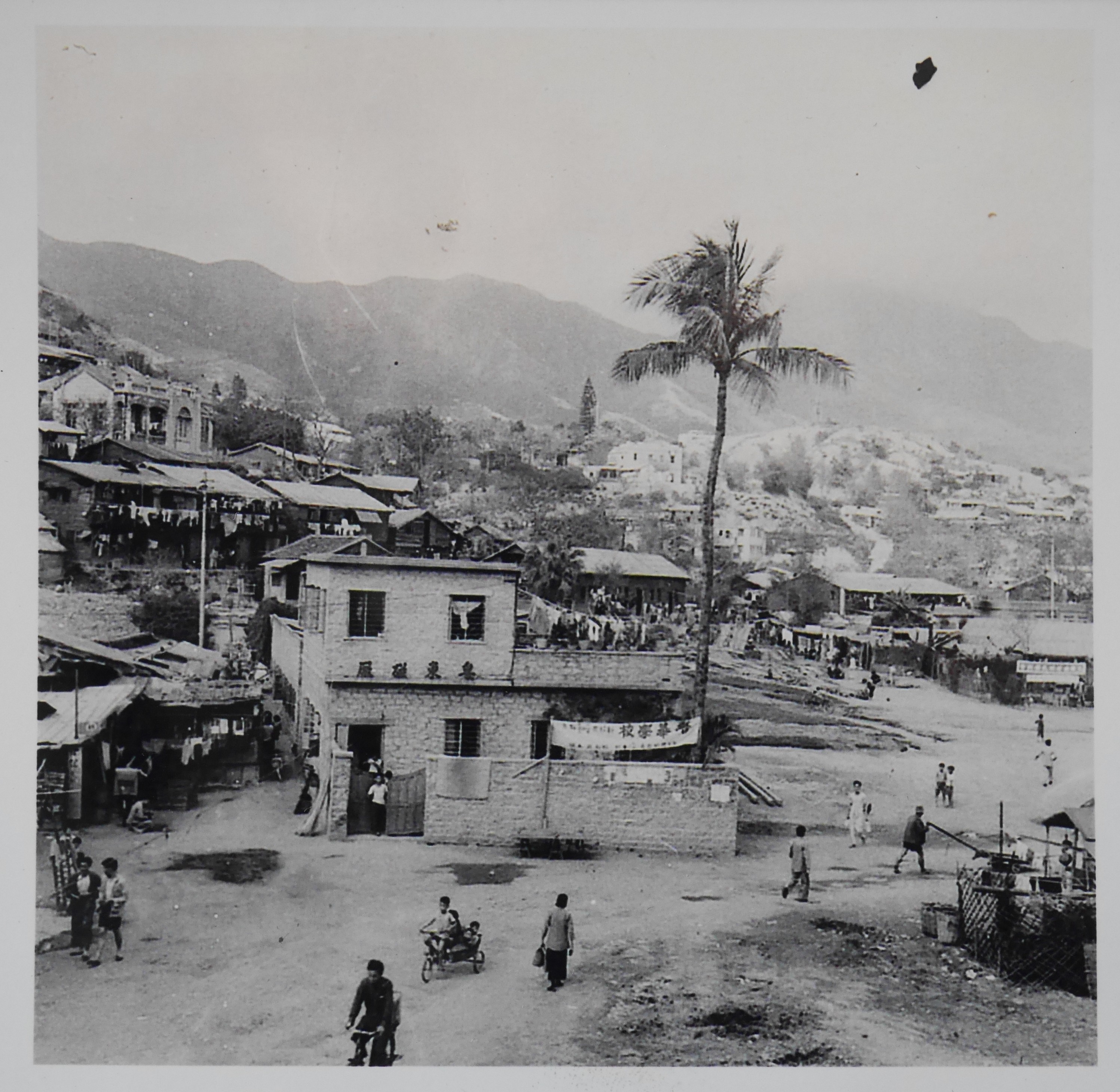
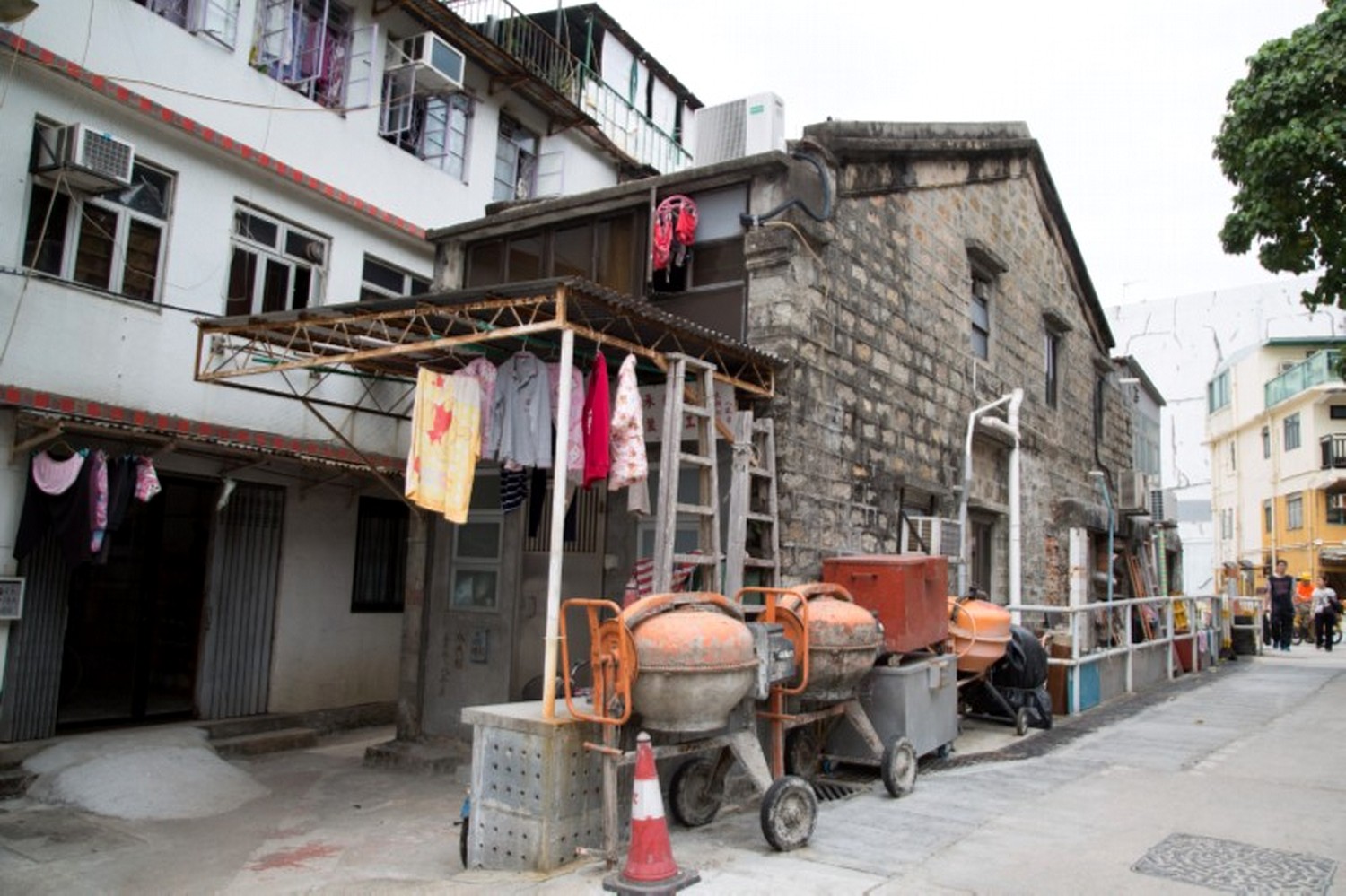
The early production facilities of Yuet Tung China Works located at Tai Hang Tung, Kowloon Tsai (Photographed 1953–1958; courtesy of Yuet Tung China Works).The former site of Kwong Yee Lung: Established in 1953, the porcelain factory distributed its workshops, warehouses, and quarters across multiple sites on Peng Chau island, including the location of the present-day green brick house (Photographed 2016; courtesy of The Hong Kong Ceramics Research Society).
The Geographical Distribution of Painted Porcelain Factories
The early painted porcelain factories in Hong Kong were primarily dispersed throughout Kowloon City, Tung Tau Tsuen, Peng Chau, Sham Tseng, San Hui of Castle Peak, Shek Kip Mei, Cheung Sha Wan, Tai Hang Tung, Sham Shui Po, Lei Cheng Uk, Shau Kei Wan (concentrated in Holy Cross Path Village), and Sha Tin. Subsequently, such workshops emerged successively in areas including Tai Po, Yuen Long, North Point, Sai Wan, the Mid-Levels, Cheung Chau, Kwun Tong, Fo Tan, Kwai Chung, and Tsuen Wan.
Original site of To Ngai Earthware: To Ngai Earthware was set up by Liu Kam Choy in 1970, located on Pak Tsz Lane near Gage Street in Central, the location had been rebuilt though fortunately the original signage with the trademark of To Ngai Earthware was retained. (2019, supplied by the Hong Kong Ceramics Research Society)Signage of Pak Tsz Lane with the trademark of To Ngai Earthware. (2019, supplied by the Hong Kong Ceramics Research Society)
Arrival of Early Porcelain Practitioners in Hong Kong and their Locations of Business
Four Primary Phases of Practitioner Influx
During the early to mid-20th century, a substantial number of Guangdong painted porcelain practitioners from Chinese Mainland migrated south to Hong Kong, establishing permanent roots and founding porcelain factories and workshops specialized in overglaze decoration. This influx of specialized practitioners transpired across four distinct historical phases. The first phase emerged between The Burning of Canton that occurred during the Canton Merchants’ Corps Uprising in 1924 and the Mukden Incident of 1931, a turbulent period that severely crippled the Canton porcelain trade. In response, the Guangzhou painted porcelain (Guangcai) masters Tam Kam-fong and Tam Kam-ping brothers, alongside Tso Lui-chung and several shareholders, pooled capital to establish the Kam Wah Loong Canton porcelain factory (the predecessor of Yuet Tung China Works) in Hong Kong in 1928. The Tam brothers had initially recruited a cohort of porcelain painting masters and painting workers from Guangzhou to start a venture in Macao; however, stifled by sluggish business and recognizing the superior commercial prospects in Hong Kong, they relocated. This foundational vanguard comprised approximately 40 to 50 practitioners. The second phase coincided with the outbreak of the Sino-Japanese War in 1937. Following the fall of Guangzhou, a massive wave of porcelain painting practitioners sought refuge and livelihood in Hong Kong. The third phase occurred around 1949, against the backdrop of the Chinese Civil War and the ensuing regime change. Amidst severe political and economic instability on the Mainland, large-scale porcelain factories and a major influx of specialized professionals relocated en masse to Hong Kong. The fourth phase developed around the advent of the Cultural Revolution in the 1960s, precipitating another significant migration of practitioners from the Mainland. This final cohort included artisans who had returned to China from Hong Kong in the mid-1950s only to re-emigrate, as well as Mainland-trained apprentices of Hong Kong masters who later migrated. Existing within the fissures of geopolitical history, many of these artisans navigated a precarious existence, oscillating between the Mainland and Hong Kong to survive. Their peripatetic lives were defined by grueling labor and untold hardships.
A bilingual Chinese and English product price list used by the Kam Wah Loong Canton porcelain factory in 1936: The document indicates that the factory was then situated in Kak Hang Tsuen, Kowloon. (Collection of Yuet Tung China Works)
The Southward Translocation of Painted Porcelain Factories to Hong Kong
In the initial phase of their establishment in Hong Kong, these migrant painted porcelain factories varied significantly in scale. They encompassed both cottage workshops (shanzhai factories)—informal, small-scale workshops composed of merely a few individuals—and family-based workshops. Beyond the aforementioned Kam Wah Loong Canton, the most prominent among these relocated enterprises was Guangzhou’s renowned Ming Kee. Prior to the founding of the People's Republic of China in 1949, Ming Kee chartered an entire Kowloon-Canton Railway through-train via the “Jiangnan Express” line. This transport successfully evacuated the factory's workforce and physical assets from the Mainland to Hong Kong. Upon arrival, the factory established a manufacturing facility in Tung Tau Tsuen and named it as the Ah Chow Factory. Other early arrivals included Guangzhou’s Ng Sheung and Yee Shun Lung, Shanghai’s Chun Hsiang Shing, and Shantou’s Chenghua. Furthermore, a Chinese ceramics company established a factory in Castle Peak which featured a dedicated division for painted porcelain production. Following the outbreak of the Korean War in 1950, the United States imposed a trade embargo on China. Paradoxically, Hong Kong—then under British colonial rule—witnessed an expansion of its porcelain industry. For instance, the Kwong Yee Lung factory was founded on Peng Chau island in 1953, operating alongside Chun Lung Sing and a few other cottage workshops nearby during the same period.
The early production facilities of Yuet Tung China Works located at Tai Hang Tung, Kowloon Tsai (Photographed 1953–1958; courtesy of Yuet Tung China Works).The former site of Kwong Yee Lung: Established in 1953, the porcelain factory distributed its workshops, warehouses, and quarters across multiple sites on Peng Chau island, including the location of the present-day green brick house (Photographed 2016; courtesy of The Hong Kong Ceramics Research Society).
The Geographical Distribution of Painted Porcelain Factories
The early painted porcelain factories in Hong Kong were primarily dispersed throughout Kowloon City, Tung Tau Tsuen, Peng Chau, Sham Tseng, San Hui of Castle Peak, Shek Kip Mei, Cheung Sha Wan, Tai Hang Tung, Sham Shui Po, Lei Cheng Uk, Shau Kei Wan (concentrated in Holy Cross Path Village), and Sha Tin. Subsequently, such workshops emerged successively in areas including Tai Po, Yuen Long, North Point, Sai Wan, the Mid-Levels, Cheung Chau, Kwun Tong, Fo Tan, Kwai Chung, and Tsuen Wan.
Original site of To Ngai Earthware: To Ngai Earthware was set up by Liu Kam Choy in 1970, located on Pak Tsz Lane near Gage Street in Central, the location had been rebuilt though fortunately the original signage with the trademark of To Ngai Earthware was retained. (2019, supplied by the Hong Kong Ceramics Research Society)Signage of Pak Tsz Lane with the trademark of To Ngai Earthware. (2019, supplied by the Hong Kong Ceramics Research Society)