About this siteChanges in the Gangcai EnvironmentEvents Recap
Changes in the Gangcai Environment
20th Century Hong Kong Painted Porcelains—Gangcai
BROWSE BY
RECENTLY VISITED
{{removeNBSP(item.name)}}
20th Century Hong Kong Painted Porcelains—Gangcai
BROWSE BY:
RECENTLY VISITED
{{item.name}}
Changes in the Gangcai Environment
Heading North: The Geographic Shift of the Industry
The gangcai industry evolved in tandem with the city’s broader processing and trade manufacturing sectors, confronting highly comparable challenges along its trajectory. Just as the industry reached its zenith, a profound structural shift disrupted its ecosystem. Following Chinese Mainland’s economic reform and opening-up in 1978, the Chinese government introduced preferential policies to attract foreign investment. In response, several Hong Kong porcelain painting factories established production lines across the Pearl River Delta. This strategic relocation was driven by the availability of cost-effective, labor-intensive workforces, abundant factory space, and material resources that collectively curtailed production costs, while simultaneously offering favorable conditions and greater latitude for developing new product lines. During this period, factories that adeptly seized these opportunities and demonstrated astute management flourished into major enterprises. These successful operations were largely characterized by their proactive modernization of industrial production techniques, agile marketing strategies, and a willingness to pioneer new market pathways.
Documented records indicate that between the 1980s and 1990s, numerous Hong Kong porcelain painting firms established manufacturing facilities across mainland regions such as Fengxi in Chaozhou, Gaobei in Dabu, Shuibei in Shenzhen, Yuanzhou in Boluo, Zhuhai, and Huizhou. At its peak, a single major order of painted porcelain could easily range from ten thousand to hundreds of thousands of pieces per style. This high demand kept production lines perpetually active and kilns operating continuously to fulfill an endless stream of business. To sustain this volume, standard-sized electric kilns became insufficient, necessitating a transition to high-efficiency tunnel kilns. Furthermore, the shipping methodology evolved dramatically; products traditionally crated in a limited number of wooden boxes were now dispatched overseas in massive shipping containers. Documented case studies reveal a single, large-scale enterprise that operated a mainland facility spanning up to 100,000 square feet and employing 700 to 800 workers; its logistics warehouse continuously hosted dozens of shipping containers to manage the relentless flow of freight.
As painted porcelain factories established production bases in the north, a prevailing industry practice emerged: core painters and technical artisans were reassigned to Chinese Mainland to oversee manufacturing and train the local workforce. Concurrently, production lines within Hong Kong were drastically scaled back or dismantled entirely, leaving only front-facing corporate offices and design departments in the city. Consequently, a vast number of local artisans faced unemployment or were compelled to transition to other professions. This wave of displacement further accelerated the decline of local talent, a trajectory that had already been set in motion by the advent of mass-production stamping and decal-transfer techniques, which had previously diminished the demand for traditional hand-painting.
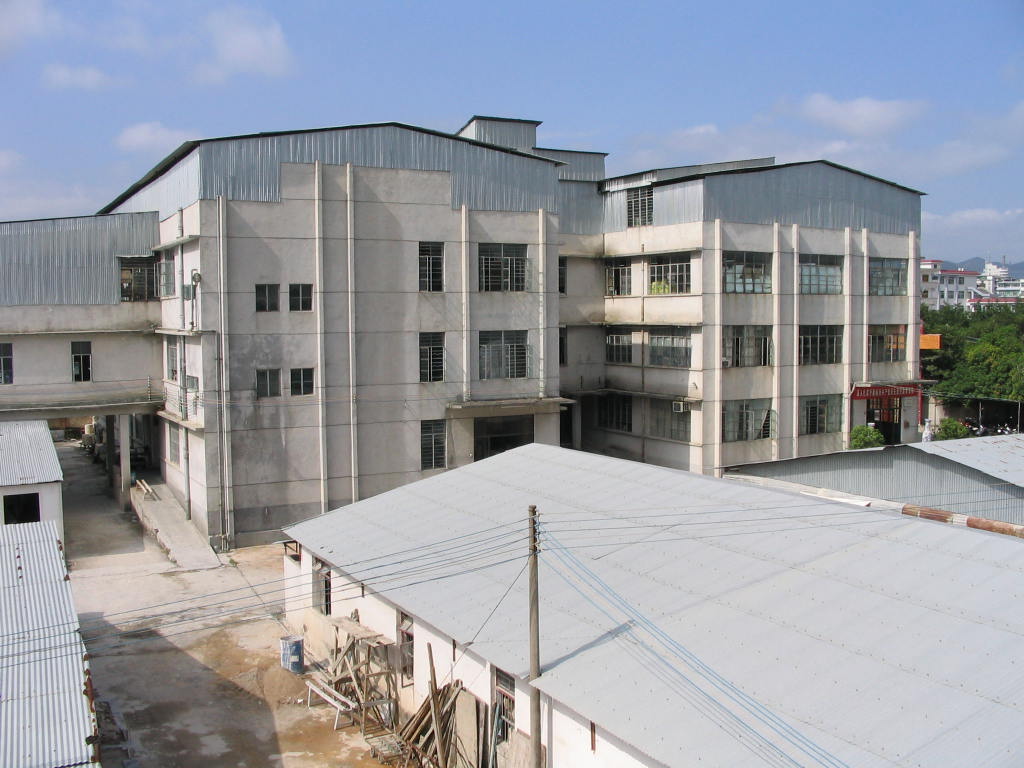
Examples of gangcai enterprises establishing production facilities in Chinese Mainland.
Guangdong Dabu Huayi, a porcelain factory founded in 1987 by To Ngai Earthware. (Image courtesy of Mr Liu Chiu-yuen)Yuanzhou Antex Porcelain Factory in Boluo County, Guangdong Province, founded in 1992 by An Tai (Photograph collection of Mr Lee Wing-chiu).
Confronting Currents: Intense Competition in the Industry
On the other hand, porcelain painting factories in Guangzhou resumed production following the conclusion of the Cultural Revolution. Moving past a period of normalization, these facilities experienced robust growth by the 1980s, offering products at prices significantly lower than those of their Hong Kong counterparts. These mainland factories not only competed directly with the relocated Hong Kong firms but also posed a severe threat to the small-scale, domestically oriented factories that remained in Hong Kong.
These domestically focused factories relied primarily on legacy production paradigms and favored traditional, commonplace decorative motifs; consequently, their market responsiveness lagged far behind that of outward-looking enterprises. Amidst the dual pressures of internal stagnation and external competition, coupled with shifting economic tides, gangcai factories began closing as early as the mid-to-late 1970s. This decline intensified sharply from the late 1980s through the late 1990s, forcing many local practitioners to reluctantly abandon their lifelong trade.
Heading North: The Geographic Shift of the Industry
The gangcai industry evolved in tandem with the city’s broader processing and trade manufacturing sectors, confronting highly comparable challenges along its trajectory. Just as the industry reached its zenith, a profound structural shift disrupted its ecosystem. Following Chinese Mainland’s economic reform and opening-up in 1978, the Chinese government introduced preferential policies to attract foreign investment. In response, several Hong Kong porcelain painting factories established production lines across the Pearl River Delta. This strategic relocation was driven by the availability of cost-effective, labor-intensive workforces, abundant factory space, and material resources that collectively curtailed production costs, while simultaneously offering favorable conditions and greater latitude for developing new product lines. During this period, factories that adeptly seized these opportunities and demonstrated astute management flourished into major enterprises. These successful operations were largely characterized by their proactive modernization of industrial production techniques, agile marketing strategies, and a willingness to pioneer new market pathways.
Documented records indicate that between the 1980s and 1990s, numerous Hong Kong porcelain painting firms established manufacturing facilities across mainland regions such as Fengxi in Chaozhou, Gaobei in Dabu, Shuibei in Shenzhen, Yuanzhou in Boluo, Zhuhai, and Huizhou. At its peak, a single major order of painted porcelain could easily range from ten thousand to hundreds of thousands of pieces per style. This high demand kept production lines perpetually active and kilns operating continuously to fulfill an endless stream of business. To sustain this volume, standard-sized electric kilns became insufficient, necessitating a transition to high-efficiency tunnel kilns. Furthermore, the shipping methodology evolved dramatically; products traditionally crated in a limited number of wooden boxes were now dispatched overseas in massive shipping containers. Documented case studies reveal a single, large-scale enterprise that operated a mainland facility spanning up to 100,000 square feet and employing 700 to 800 workers; its logistics warehouse continuously hosted dozens of shipping containers to manage the relentless flow of freight.
As painted porcelain factories established production bases in the north, a prevailing industry practice emerged: core painters and technical artisans were reassigned to Chinese Mainland to oversee manufacturing and train the local workforce. Concurrently, production lines within Hong Kong were drastically scaled back or dismantled entirely, leaving only front-facing corporate offices and design departments in the city. Consequently, a vast number of local artisans faced unemployment or were compelled to transition to other professions. This wave of displacement further accelerated the decline of local talent, a trajectory that had already been set in motion by the advent of mass-production stamping and decal-transfer techniques, which had previously diminished the demand for traditional hand-painting.
Examples of gangcai enterprises establishing production facilities in Chinese Mainland.
Guangdong Dabu Huayi, a porcelain factory founded in 1987 by To Ngai Earthware. (Image courtesy of Mr Liu Chiu-yuen)Yuanzhou Antex Porcelain Factory in Boluo County, Guangdong Province, founded in 1992 by An Tai (Photograph collection of Mr Lee Wing-chiu).
Confronting Currents: Intense Competition in the Industry
On the other hand, porcelain painting factories in Guangzhou resumed production following the conclusion of the Cultural Revolution. Moving past a period of normalization, these facilities experienced robust growth by the 1980s, offering products at prices significantly lower than those of their Hong Kong counterparts. These mainland factories not only competed directly with the relocated Hong Kong firms but also posed a severe threat to the small-scale, domestically oriented factories that remained in Hong Kong.
These domestically focused factories relied primarily on legacy production paradigms and favored traditional, commonplace decorative motifs; consequently, their market responsiveness lagged far behind that of outward-looking enterprises. Amidst the dual pressures of internal stagnation and external competition, coupled with shifting economic tides, gangcai factories began closing as early as the mid-to-late 1970s. This decline intensified sharply from the late 1980s through the late 1990s, forcing many local practitioners to reluctantly abandon their lifelong trade.