About this siteProfile of Early Gangcai PractitionersEvents Recap
Profile of Early Gangcai Practitioners
20th Century Hong Kong Painted Porcelains—Gangcai
BROWSE BY
RECENTLY VISITED
{{removeNBSP(item.name)}}
20th Century Hong Kong Painted Porcelains—Gangcai
BROWSE BY:
RECENTLY VISITED
{{item.name}}
Profile of Early Gangcai Practitioners
Regional Origins of Early Painters
Early porcelain painting artisans predominantly migrated directly from Mainland to Hong Kong, while a portion relocated via or directly from Macao. In terms of ancestral origin, a considerable number of these painters hailed from Gaoyao, Gaoming, and Kaiping in Guangdong Province. Those from Kaiping were predominantly of the Szeto (or Sitou) clan. Notably, Szeto Chun-cheuk, the founder of Yee Shun Lung—one of Guangzhou’s most historically significant and prominent guangcai porcelain factory—was a native of Kaiping, and his descendants subsequently continued their practice in Hong Kong. In addition, porcelain painters from the Chaoshan (or Teoswa) region and its surrounding territories constituted a significant portion of the workforce.
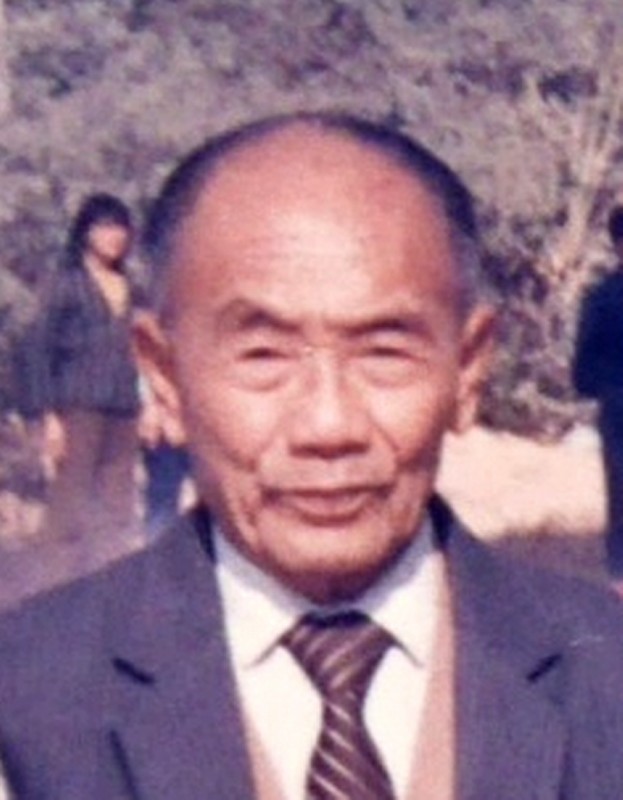
Painting master Chan King-ho: Originally a native of Gaoyao (Photographed 2016 by Mak Siu-fung; courtesy of The Hong Kong Ceramics Research Society).Painting master Szeto Wai-tak: Originally a native of Kaiping, and a descendant of the founder of Yee Shun Lung (Photographed 1991; courtesy of Mr Szeto Wing-chuen).
Painting master Lee Siu-man: Originally a native of Shantou (Photographed in the 1950s; courtesy of Mr Lee Siu-man).Painting master Cheung Kam-ping: A practitioner who relocated from Macao to Hong Kong during the early years of his career (Photographed 1984; courtesy of Mr Cheung Kam-ping).
Professional Backgrounds of Porcelain Painters
While the majority of early painters had previously been employed within painted porcelain factories in Chinese Mainland, individuals from diverse occupational backgrounds also entered the industry upon arriving in Hong Kong, acquiring their craft through on-the-job training. A notable and unique case is the Tao Fong Shan Christian Centre in Sha Tin. In an effort to provide Buddhist migrants from the Mainland with a viable livelihood, the institution offered porcelain painting training, simultaneously utilizing the decorated wares to propagate the Christian faith; notably, the painters of the Centre hailed from various Chinese provinces. Subsequently, as the Hong Kong painted porcelain industry transitioned into its stages of growth and expansion, the workforce increasingly integrated individuals born and raised locally. The convergence of diverse talents in Hong Kong gradually forged a highly composite community.
Porcelain painting masters from the Chaoshan region who migrated to Hong Kong: A group portrait of So Siu-choy, Liu Kam-choy, Lee Siu-man, and Tse Chung-ng, taken at the Earth God Temple in Lei Cheng Uk village. (Photographed 1949/1950; courtesy of Mr Lee Siu-man)Yuet Tung China Works: A gathering of porcelain painting masters who had relocated to Hong Kong from Chinese Mainland. (Photographed 1953–1955; courtesy of Yuet Tung China Works)
The Porcelain Workshop at the Tao Fong Shan Christian Centre: Featuring painters hailing from various provinces across China. (Photographed prior to 1966; courtesy of Tao Fong Shan Christian Centre)Renowned painting masters Lee Siu-man and So Siu-choy: Captured on-site at a Chinese porcelain factory in Castle Peak Bay. (Photographed 1952; courtesy of Mr Lee Siu-man)
Early porcelain painting artisans predominantly migrated directly from Mainland to Hong Kong, while a portion relocated via or directly from Macao. In terms of ancestral origin, a considerable number of these painters hailed from Gaoyao, Gaoming, and Kaiping in Guangdong Province. Those from Kaiping were predominantly of the Szeto (or Sitou) clan. Notably, Szeto Chun-cheuk, the founder of Yee Shun Lung—one of Guangzhou’s most historically significant and prominent guangcai porcelain factory—was a native of Kaiping, and his descendants subsequently continued their practice in Hong Kong. In addition, porcelain painters from the Chaoshan (or Teoswa) region and its surrounding territories constituted a significant portion of the workforce.
Painting master Chan King-ho: Originally a native of Gaoyao (Photographed 2016 by Mak Siu-fung; courtesy of The Hong Kong Ceramics Research Society).Painting master Szeto Wai-tak: Originally a native of Kaiping, and a descendant of the founder of Yee Shun Lung (Photographed 1991; courtesy of Mr Szeto Wing-chuen).
Painting master Lee Siu-man: Originally a native of Shantou (Photographed in the 1950s; courtesy of Mr Lee Siu-man).Painting master Cheung Kam-ping: A practitioner who relocated from Macao to Hong Kong during the early years of his career (Photographed 1984; courtesy of Mr Cheung Kam-ping).
Professional Backgrounds of Porcelain Painters
While the majority of early painters had previously been employed within painted porcelain factories in Chinese Mainland, individuals from diverse occupational backgrounds also entered the industry upon arriving in Hong Kong, acquiring their craft through on-the-job training. A notable and unique case is the Tao Fong Shan Christian Centre in Sha Tin. In an effort to provide Buddhist migrants from the Mainland with a viable livelihood, the institution offered porcelain painting training, simultaneously utilizing the decorated wares to propagate the Christian faith; notably, the painters of the Centre hailed from various Chinese provinces. Subsequently, as the Hong Kong painted porcelain industry transitioned into its stages of growth and expansion, the workforce increasingly integrated individuals born and raised locally. The convergence of diverse talents in Hong Kong gradually forged a highly composite community.
Porcelain painting masters from the Chaoshan region who migrated to Hong Kong: A group portrait of So Siu-choy, Liu Kam-choy, Lee Siu-man, and Tse Chung-ng, taken at the Earth God Temple in Lei Cheng Uk village. (Photographed 1949/1950; courtesy of Mr Lee Siu-man)Yuet Tung China Works: A gathering of porcelain painting masters who had relocated to Hong Kong from Chinese Mainland. (Photographed 1953–1955; courtesy of Yuet Tung China Works)
The Porcelain Workshop at the Tao Fong Shan Christian Centre: Featuring painters hailing from various provinces across China. (Photographed prior to 1966; courtesy of Tao Fong Shan Christian Centre)Renowned painting masters Lee Siu-man and So Siu-choy: Captured on-site at a Chinese porcelain factory in Castle Peak Bay. (Photographed 1952; courtesy of Mr Lee Siu-man)