There are many kinds of motifs in use in gangcai, with ideas taken from all over the world, common themes include: flora, human figure, fauna, avifauna, landscape, building, calligraphy, artwork, etc., while there are also distinctive themes such as heraldry, trademark, scenes of Hong Kong, chinoiserie, Japanesque, Lingnan literati.
2. Traditional Motifs
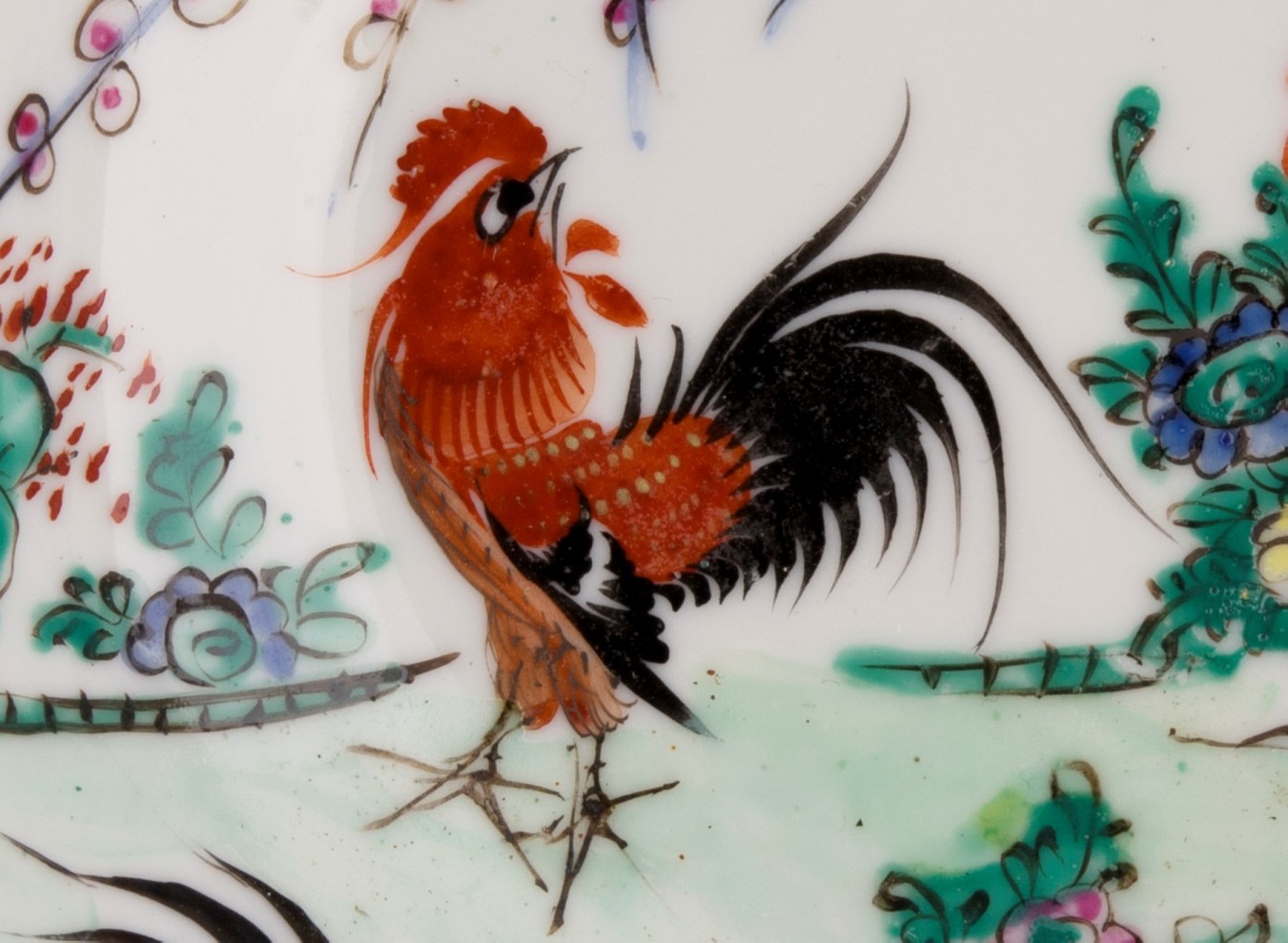
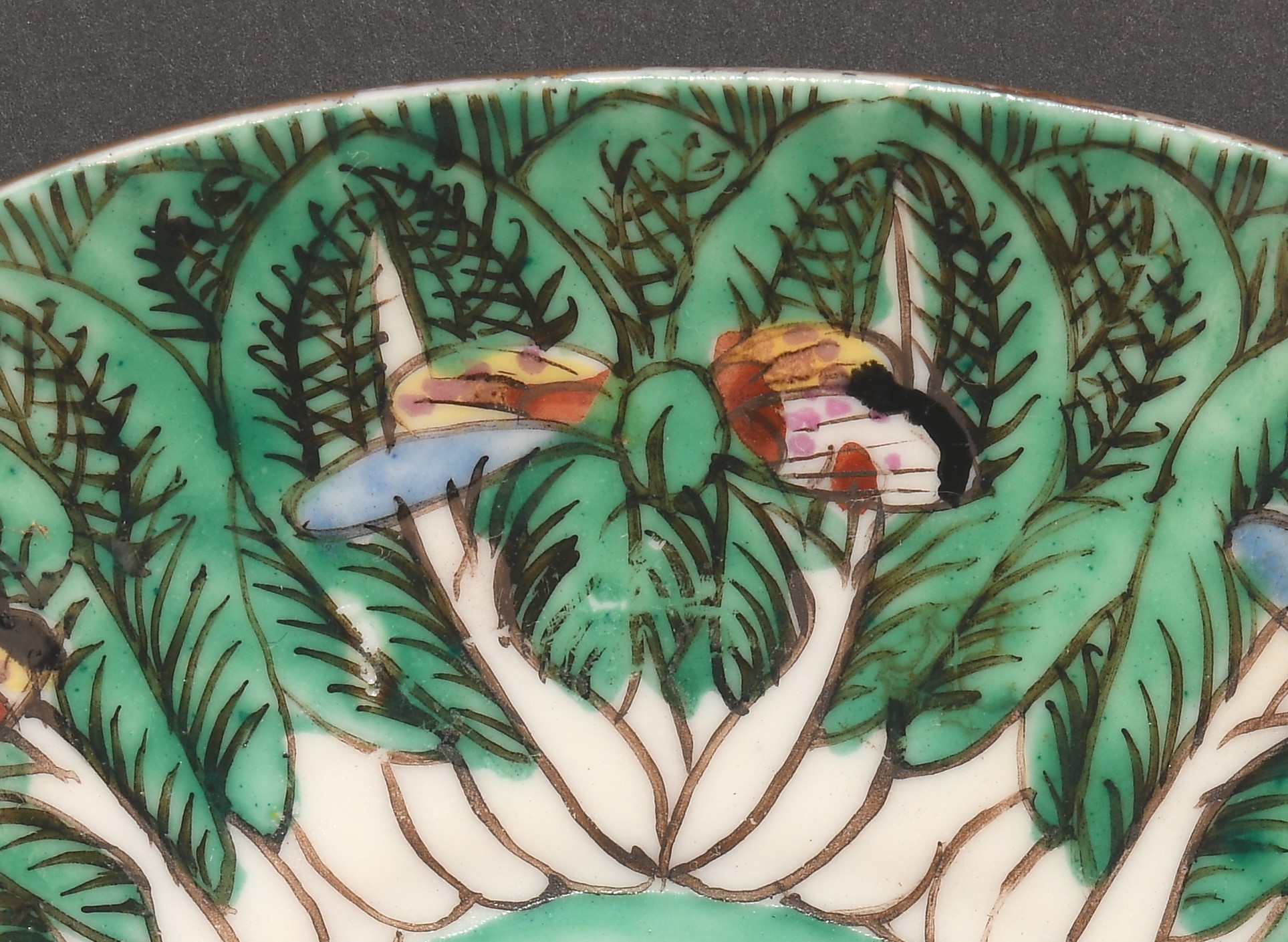
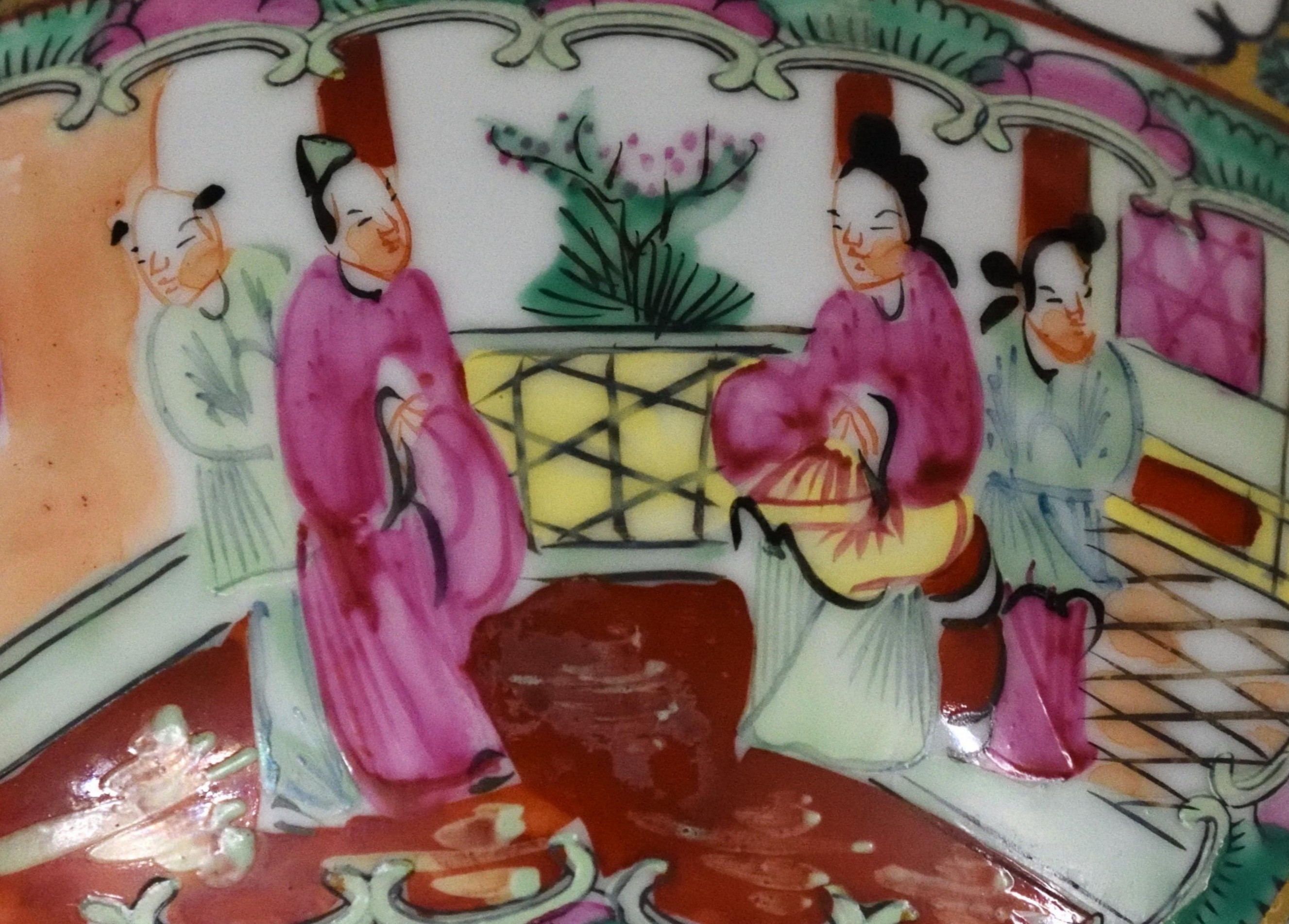
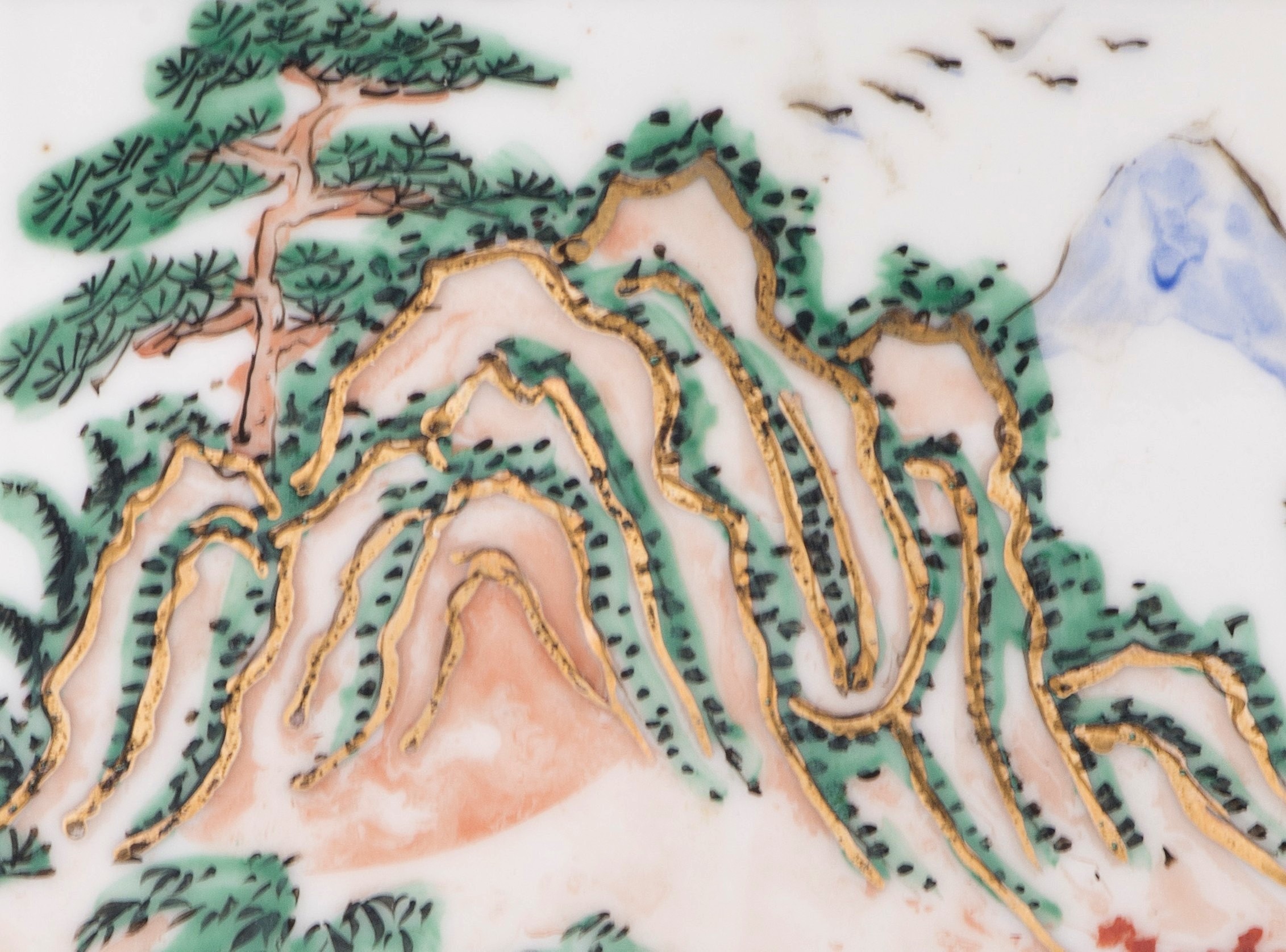
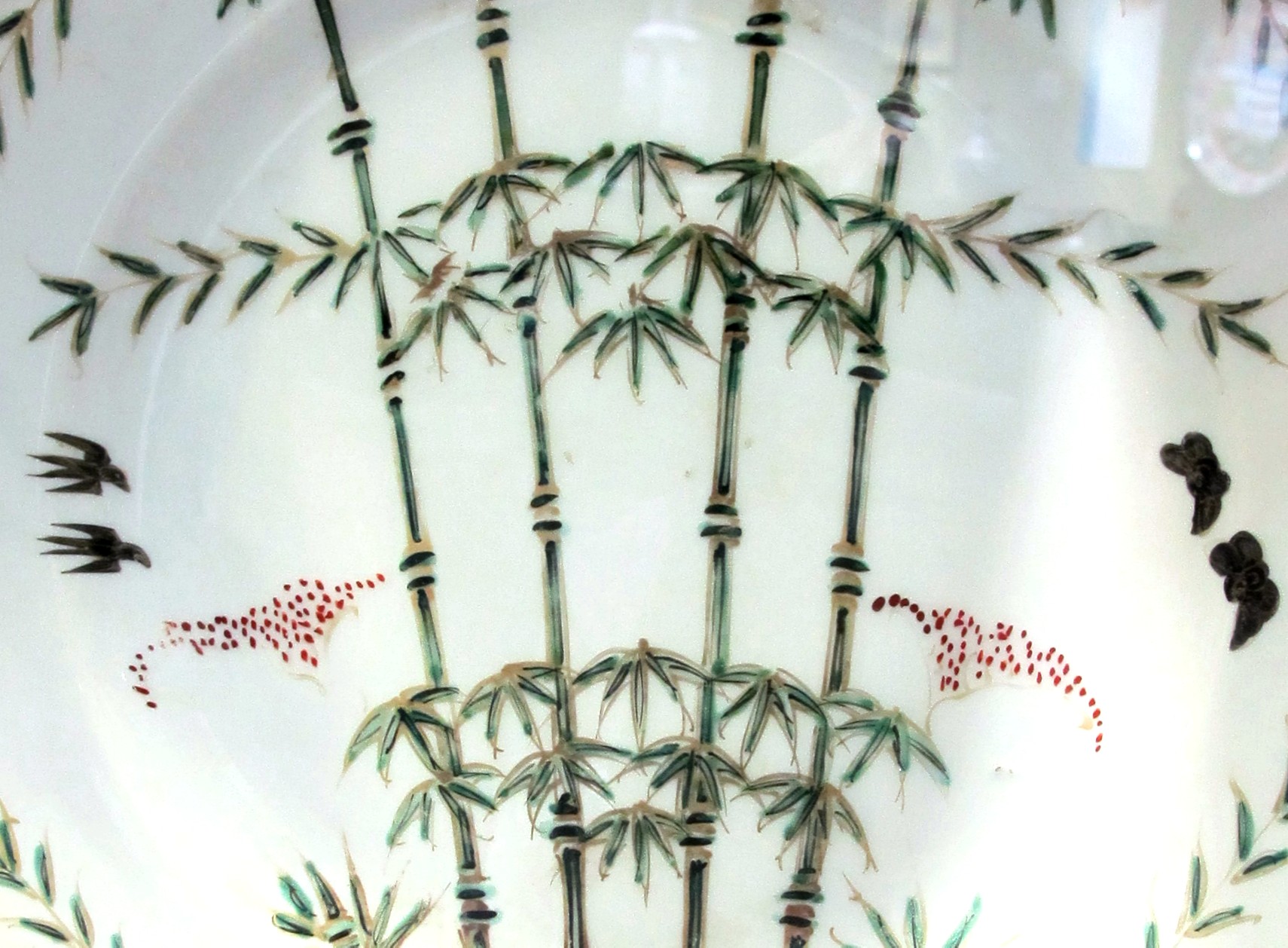
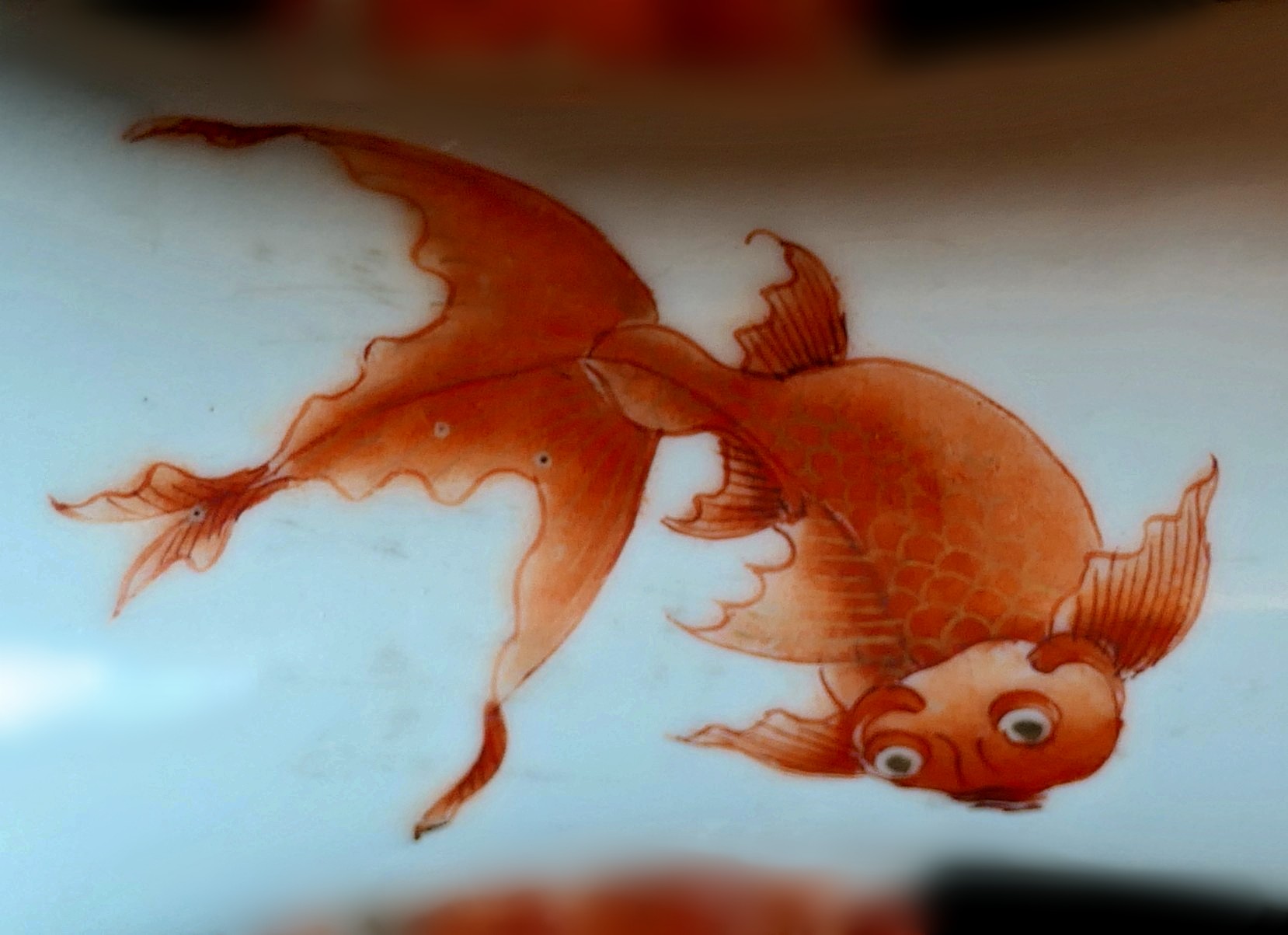
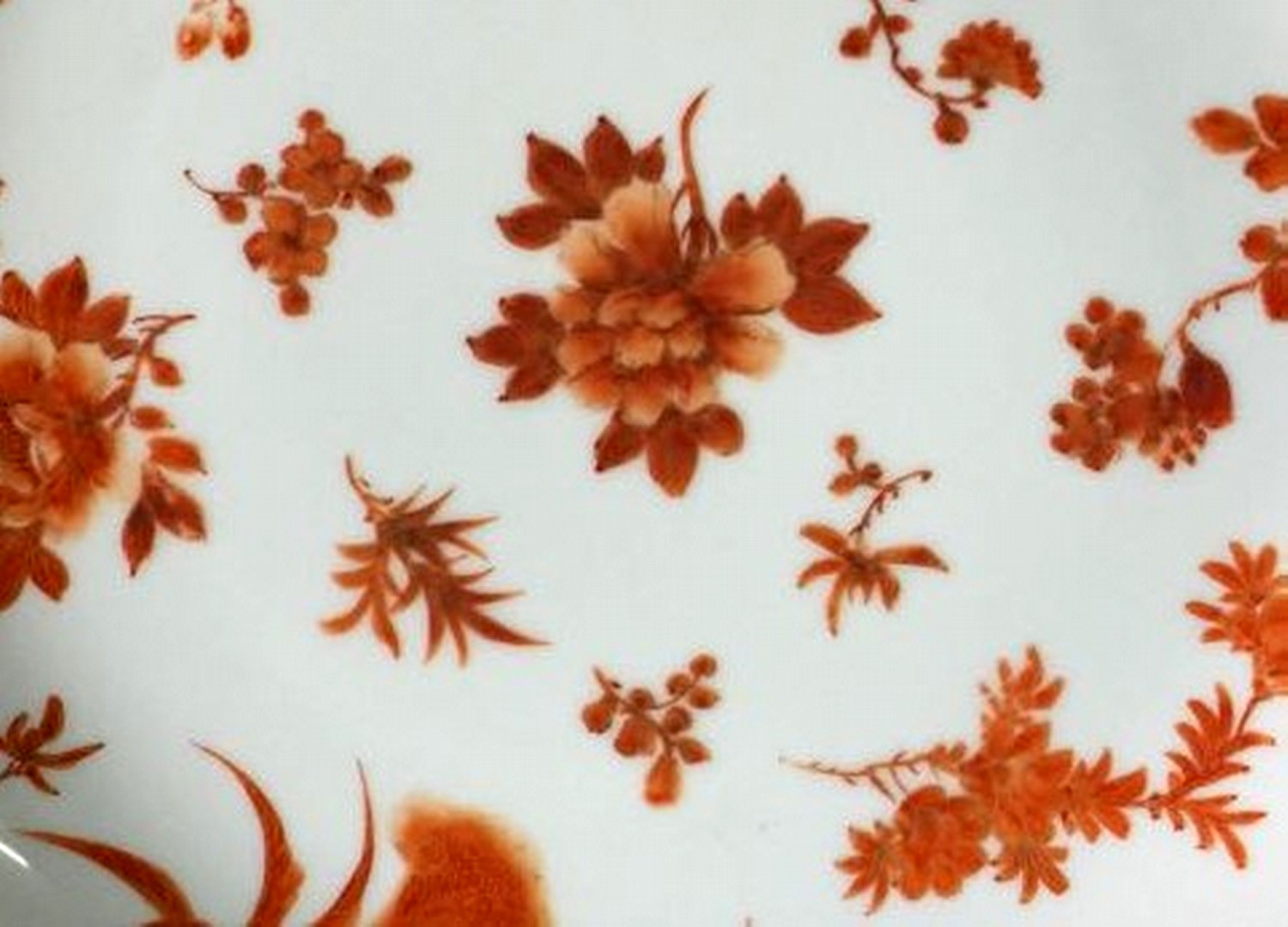
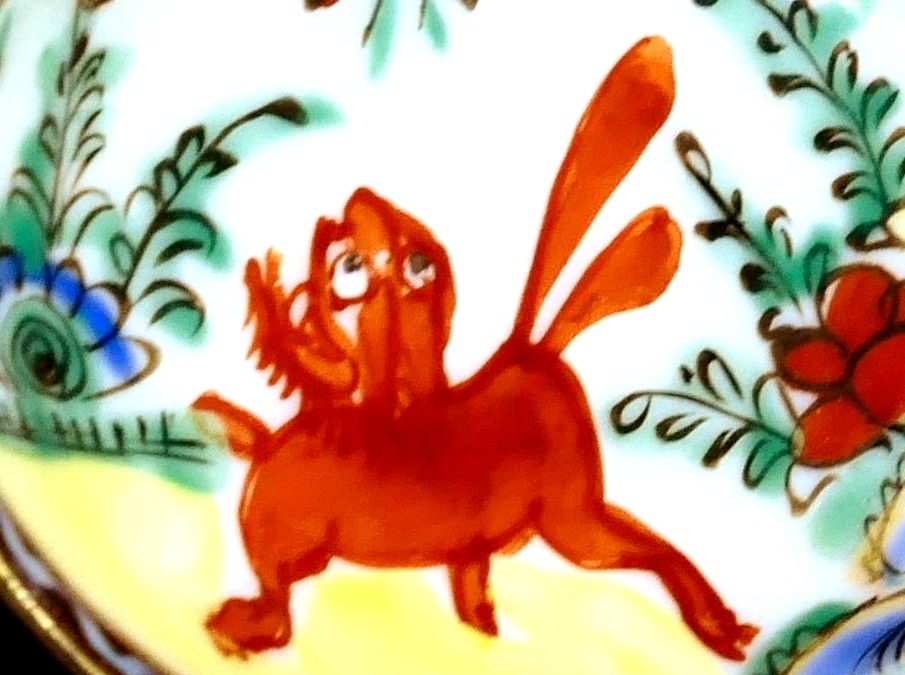
Those guangcai factories coming south mainly uses traditional guangcai motifs, such as: butterflies, dragon and phoenix, fighting rooster, Chinese white cabbage, ancient figures, landscape, bamboo, flowers, fruits, goldfish, cordyceps militaris, avifauna, etc.
ButterfliesDragon
Fighting roosterChinese white cabbage
Ancient figuresLandscape
BambooFlowers
FruitsGoldfish
Cordyceps MilitarisAvifauna
(Courtesy of Lee Wing Chiu, Chan King Ho, Peng Chau Chiu Kee Porcelain, Yuet Tung China Works, Ho Liu Yee Ling, and The Hong Kong Ceramics Research Society)
3. Arrangement of structural Elements
Although there are many themes of motifs in gangcai, there are only three usual structural elements in the design: border, panel frame, and patterns, these elements support and accentuate the main theme. Furthermore, each of these structural element is also delicately designed and serves as a form of decoration in its own right. Such design spread from Jiangxi to Guangzhou and then to Hong Kong, where they have remained popular. In addition, there is a stylised structural element with distinct Lingnan characteristics known as Rose Medallion; it combines several interlocking components, giving it a distinctive character and remains a timeless design.
This pieces shows how the border, panel frame and pattern come together to accentuate the theme motif: export porcelain bowl in the style of Jiaqing and Daoguang reigns. (Mid 1980s, painted by Cheung Kam Ping; collection of Hong Kong Heritage Museum)
Border – The continuous decoration painted around the porcelain wares. The design imitates the decoration found on brocade and is used to decorate the rim of around the base of porcelain wares, and sometimes around the neck of a vase or jar to separate different regions of canvas.
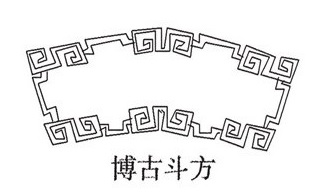
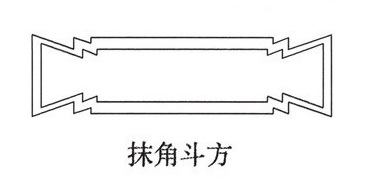
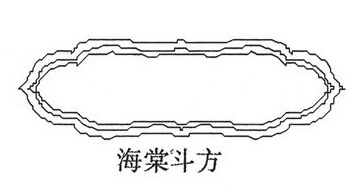
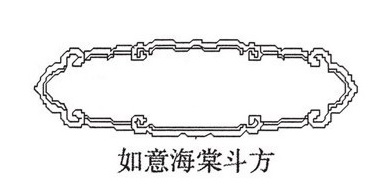
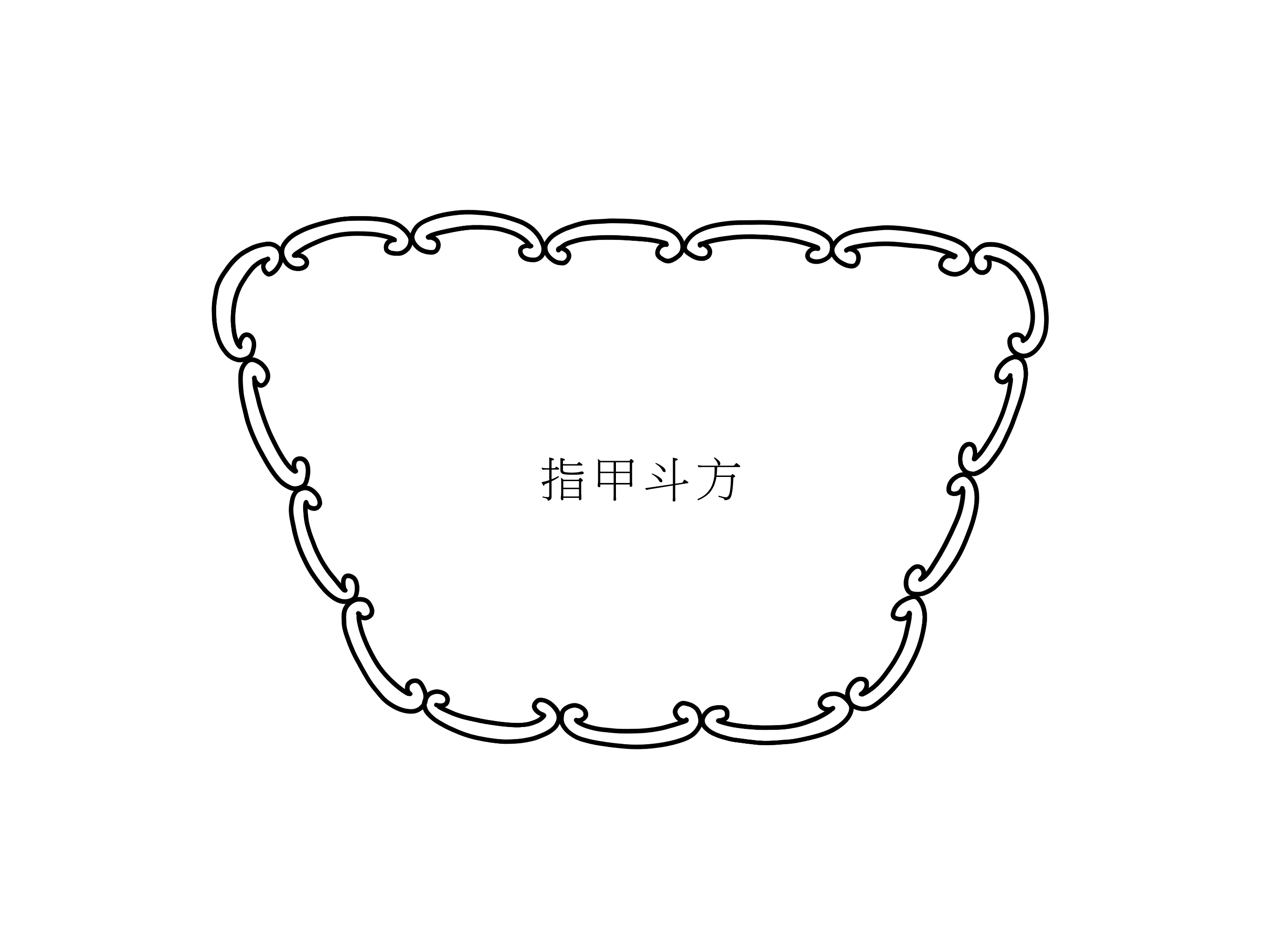
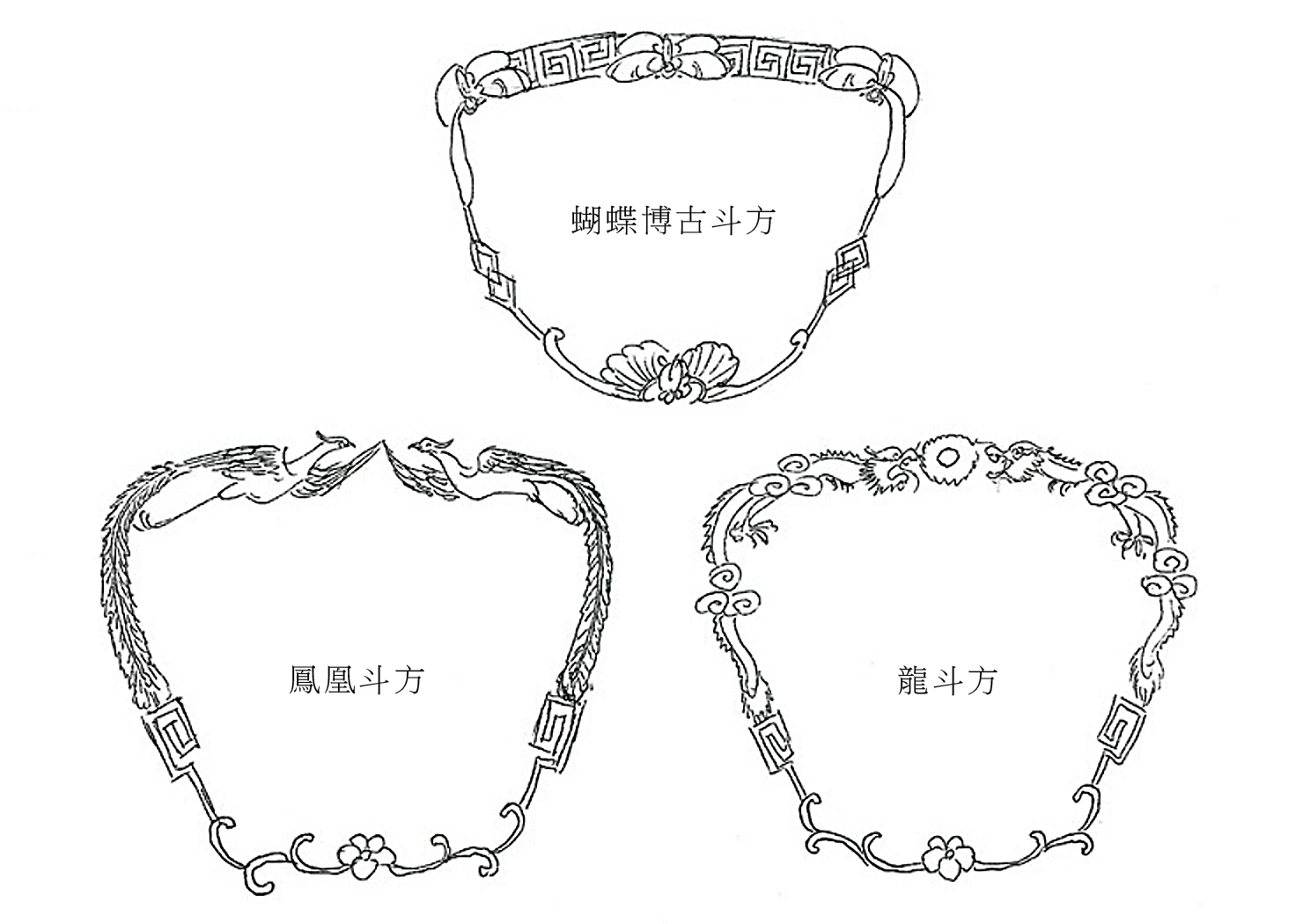
Panel frame – This element separates the canvas into several regions. Panel frame looks like a window encompassing the main motif, to give prominence to the main motif and separate it from the surrounding pattern. There are many types of panel frames, composing of different shapes. Each porcelain piece can have more than one panel frames, sometimes small panel frames form part of the border design.
Pattern – This fills the space between the main motif, panel frame and border. Most of the designs originated from the weaving industry during the Ming dynasty.
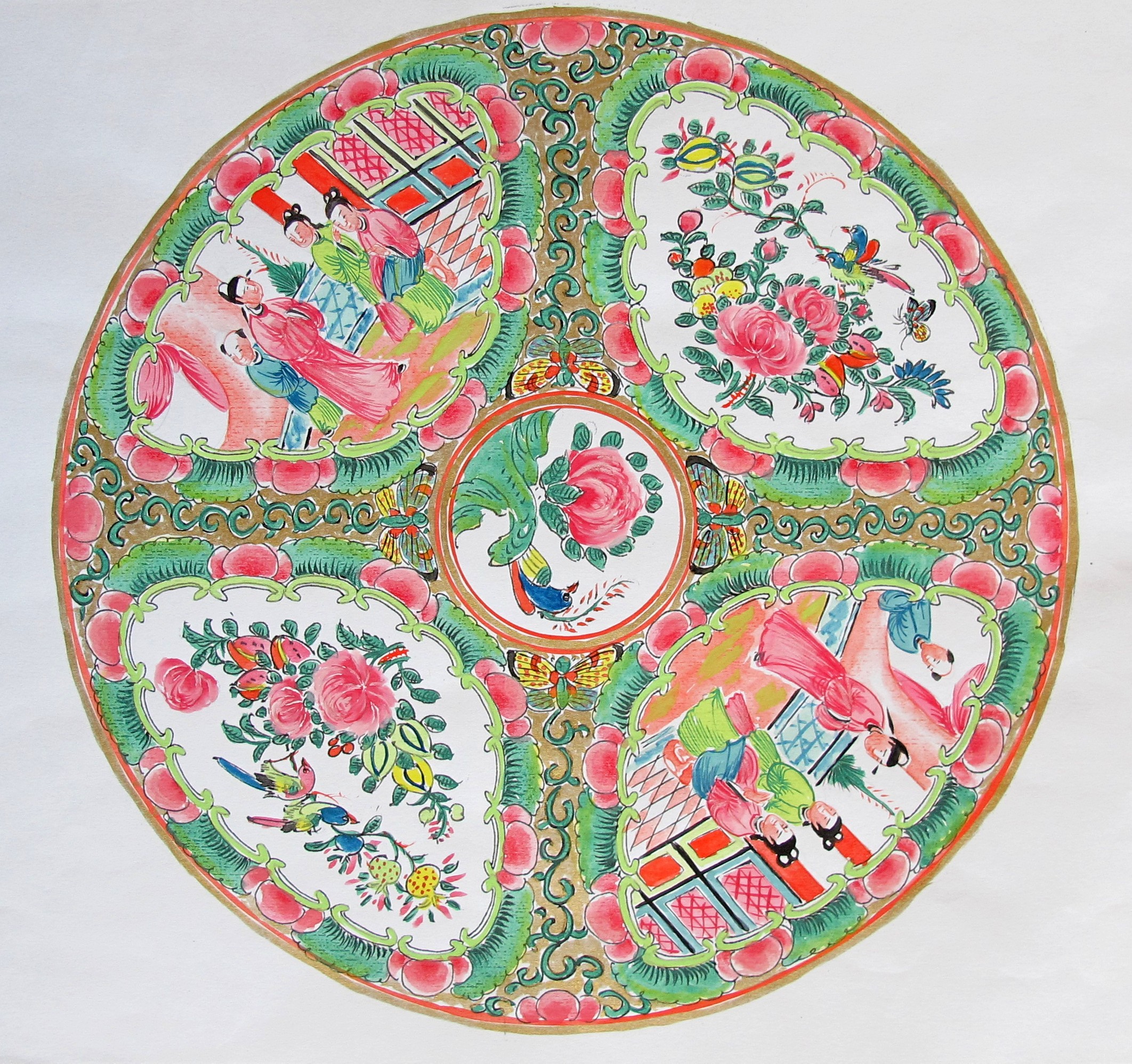
Rose Medallion – A combination design uniting gilded motifs such as Canton rose, waterlily, fruits, butterflies, adding panel frames, with the smaller panel frames in Rococo style. The white space can be filled with Canton rose or other thematic motifs, panel frames around the border are decorated with figures or flora and fauna. The design is typically gilded and is lively yet elegant.
Rose medallion: outline (2017, painted by Cheung Kam Ping; collection of The Hong Kong Ceramics Research Society)Rose medallion: painted but before firing (2017, painted by Cheung Kam Ping; collection of The Hong Kong Ceramic Research Society)
Plate with gilded figures and rose medallion (Republican period; collection of Yuet Tung China Works)
Gangcai factories produce tailored porcelain wares for customers, either coming up with entirely new designs or painting on designs provided by the clients. A common practise is for the customer to choose from a selection of standard traditional designs and then incorporating the coat of arms, logo, text or images supplied by the customer as the central motif of the design. In this way, a single composition can yield many different variations, which is a time-saving and cost-effective approach for the factory. The rose medallion with gilded figures/flora and fauna/avifauna is a typical example.
Rose medallion (ink outline): the white space is reserved for Canton rose motif, with the centre available to be painted with the personalised coat of arms, text or other designs. (Collection of Yuet Tung China Works)
There are many kinds of motifs in use in gangcai, with ideas taken from all over the world, common themes include: flora, human figure, fauna, avifauna, landscape, building, calligraphy, artwork, etc., while there are also distinctive themes such as heraldry, trademark, scenes of Hong Kong, chinoiserie, Japanesque, Lingnan literati.
2. Traditional Motifs
Those guangcai factories coming south mainly uses traditional guangcai motifs, such as: butterflies, dragon and phoenix, fighting rooster, Chinese white cabbage, ancient figures, landscape, bamboo, flowers, fruits, goldfish, cordyceps militaris, avifauna, etc.
ButterfliesDragon
Fighting roosterChinese white cabbage
Ancient figuresLandscape
BambooFlowers
FruitsGoldfish
Cordyceps MilitarisAvifauna
(Courtesy of Lee Wing Chiu, Chan King Ho, Peng Chau Chiu Kee Porcelain, Yuet Tung China Works, Ho Liu Yee Ling, and The Hong Kong Ceramics Research Society)
3. Arrangement of structural Elements
Although there are many themes of motifs in gangcai, there are only three usual structural elements in the design: border, panel frame, and patterns, these elements support and accentuate the main theme. Furthermore, each of these structural element is also delicately designed and serves as a form of decoration in its own right. Such design spread from Jiangxi to Guangzhou and then to Hong Kong, where they have remained popular. In addition, there is a stylised structural element with distinct Lingnan characteristics known as Rose Medallion; it combines several interlocking components, giving it a distinctive character and remains a timeless design.
This pieces shows how the border, panel frame and pattern come together to accentuate the theme motif: export porcelain bowl in the style of Jiaqing and Daoguang reigns. (Mid 1980s, painted by Cheung Kam Ping; collection of Hong Kong Heritage Museum)
Border – The continuous decoration painted around the porcelain wares. The design imitates the decoration found on brocade and is used to decorate the rim of around the base of porcelain wares, and sometimes around the neck of a vase or jar to separate different regions of canvas.
Panel frame – This element separates the canvas into several regions. Panel frame looks like a window encompassing the main motif, to give prominence to the main motif and separate it from the surrounding pattern. There are many types of panel frames, composing of different shapes. Each porcelain piece can have more than one panel frames, sometimes small panel frames form part of the border design.
Pattern – This fills the space between the main motif, panel frame and border. Most of the designs originated from the weaving industry during the Ming dynasty.
Rose Medallion – A combination design uniting gilded motifs such as Canton rose, waterlily, fruits, butterflies, adding panel frames, with the smaller panel frames in Rococo style. The white space can be filled with Canton rose or other thematic motifs, panel frames around the border are decorated with figures or flora and fauna. The design is typically gilded and is lively yet elegant.
Rose medallion: outline (2017, painted by Cheung Kam Ping; collection of The Hong Kong Ceramics Research Society)Rose medallion: painted but before firing (2017, painted by Cheung Kam Ping; collection of The Hong Kong Ceramic Research Society)
Plate with gilded figures and rose medallion (Republican period; collection of Yuet Tung China Works)
Gangcai factories produce tailored porcelain wares for customers, either coming up with entirely new designs or painting on designs provided by the clients. A common practise is for the customer to choose from a selection of standard traditional designs and then incorporating the coat of arms, logo, text or images supplied by the customer as the central motif of the design. In this way, a single composition can yield many different variations, which is a time-saving and cost-effective approach for the factory. The rose medallion with gilded figures/flora and fauna/avifauna is a typical example.
Rose medallion (ink outline): the white space is reserved for Canton rose motif, with the centre available to be painted with the personalised coat of arms, text or other designs. (Collection of Yuet Tung China Works)