The craft of gangcai draws heavily from Guangdong coloured porcelain, tracing further for the origin, it shares a common lineage with the time-honoured tradition of Jingdezhen porcelain from Jiangxi Province. Culture is an organic entity that evolves continuously; since the art of Chinese coloured porcelain was introduced to Hong Kong, it has built upon the past whilst forging a new path, undergoing numerous transformations in the process.
Basic Materials for Painting
In the production of painted porcelain, there has to be blanks and pigment for painting, it looks more splendid if glided.
Blanks
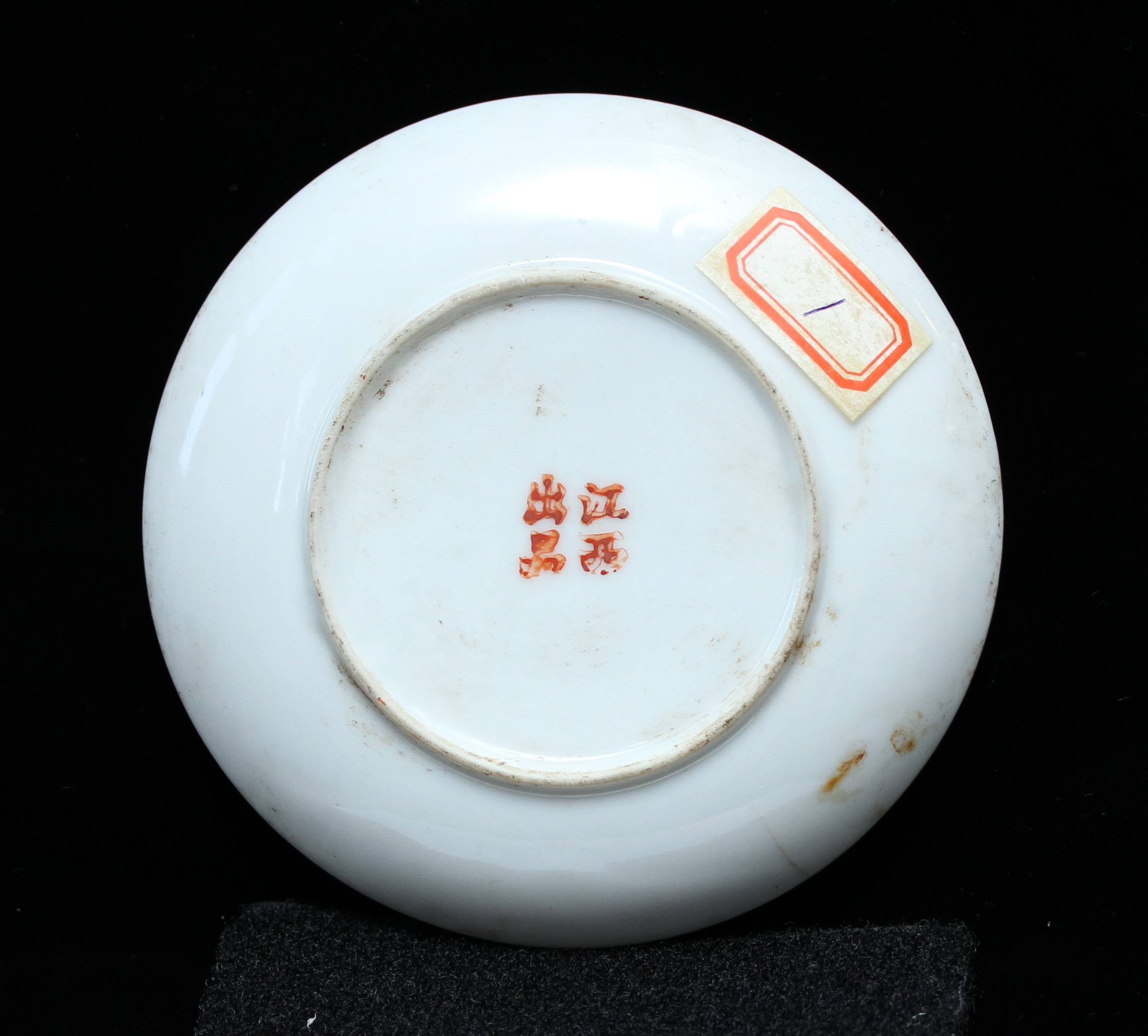
The porcelain used for painting is primarily plain white porcelain that has been fired with a transparent glaze; this is known in the trade as blank. Practitioners in Hong Kong mainly imported readily made blanks, sourced primarily from Chinese Mainland, Japan and Taiwan. Blanks from the Mainland can be further subdivided into those from Jiangxi, Meichao or Boluo. Japanese blanks almost exclusively came from Nagoya and were primarily for tableware, characterised by complete sets in a wide variety of forms, strictly adhering to specifications and had exquisite body quality. Taiwanese bodies were produced in Yingge; they include large-scale pieces with a porcelain body that is white with a hint of green, and were sturdy, making them particularly suitable for producing antique replicas. Many of the large gangcai pieces were made from blanks originate from Yingge. In the early days, Hong Kong painting masters specialised in exquisite antique replica porcelain often used old blanks for their work; these were sourced from the Guangzhou porcelain factory with a long history, Yee Shun Loong.
The main importers of blanks in Hong Kong include: Chan Suen Kee, Nam Mau, Miyamoto Bokei Kaisha, and Sunny China Co. Ltd. Suppliers of blanks from Jiangxi include Kung Wah Lee, whose proprietor was from Jiangxi. Following the launch of the China Import and Export Fair (Canton Fair), painted porcelain factories could be invited to the fair through the Hong Kong Porcelain Merchants Association. Some major gangcai factories would produce blanks in-house or commission ceramic factories to manufacture blanks for them to paint.
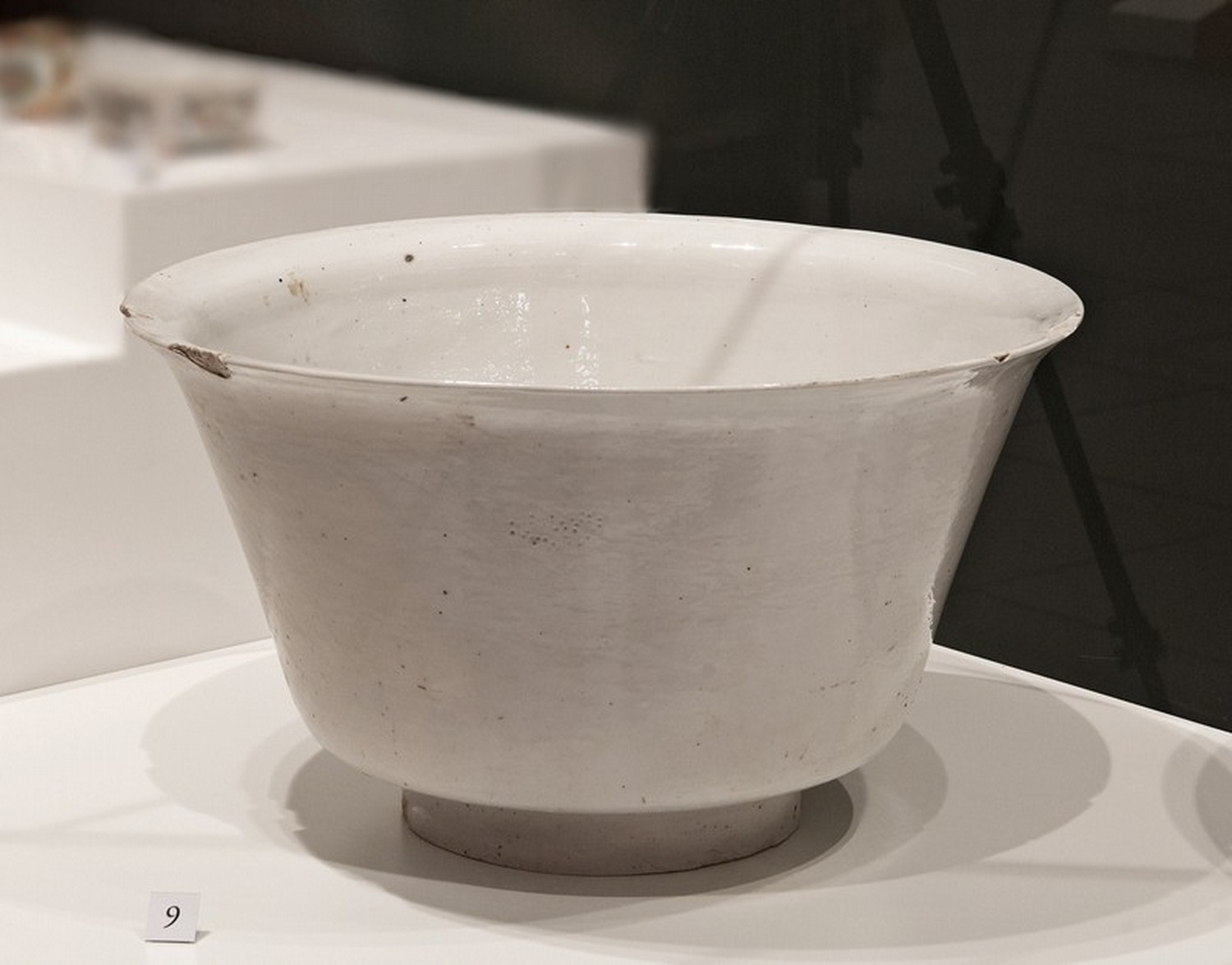
In fact, there were once several factories in Hong Kong producing blanks besides ceramic tableware and sculptures. They were primarily active during 1950s and 1980s, scattered around Tai Po, Lei Yue Mun and Yuen Long. Most of the businessowners came to Hong Kong from Chinese Mainland in 1949, and many were technical specialists in ceramic, including some who had studied in the USA or Germany; meanwhile, the ceramic sculptors were predominantly from Shiwan in Guangdong and Dehua in Fujian. Those gangcai wares that use blanks produced in Hong Kong and decorated in Hong Kong can be described as 100 per cent 'Made in Hong Kong'.
Various kinds of blanks –
Blanks for commodity porcelain (supplied by The Hong Kong Ceramics Research Society)Blank from Jiangxi province (Collection of Yuet Tung China Works)
Japanese blank: manufactured by Miyamoto Beoki in Nagoya. (Collection of Yuet Tung China Works)Blank from Taiwan (supplied by Yiu Hoi Ki)
Blank made in Hong Kong – bell shape bowl: produced by Majestic Chemical Art Craft Manufacture. Located at the present site of Jockey Club Lei Yue Mun Plus (1980s, collection of Yiu Hoi Ki)Blank made in Hong Kong – white porcelain figurines of the Great Beauties. (1960s, collection of Yuet Tung China Works)
Pigment and Liquid Gold
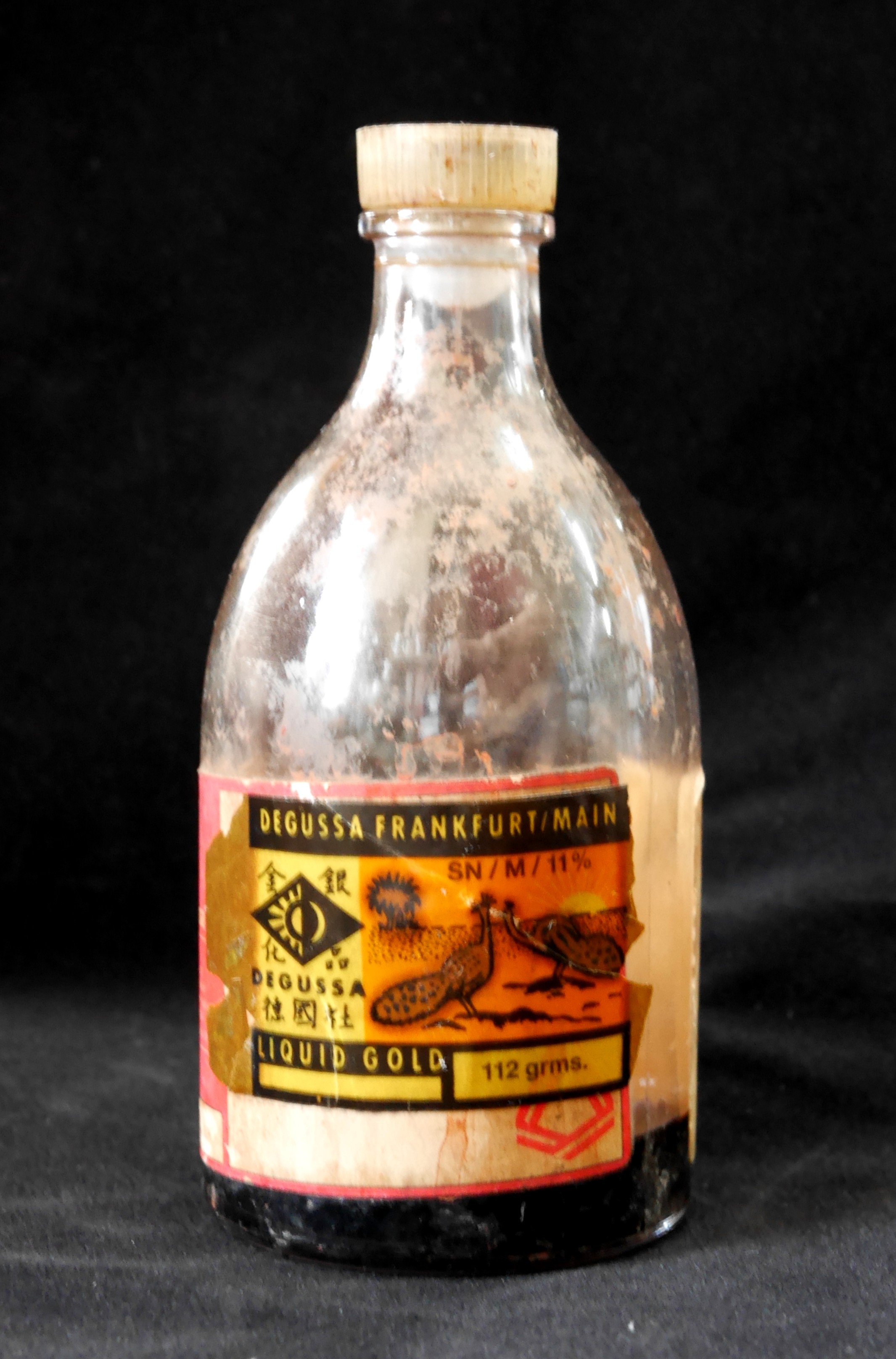
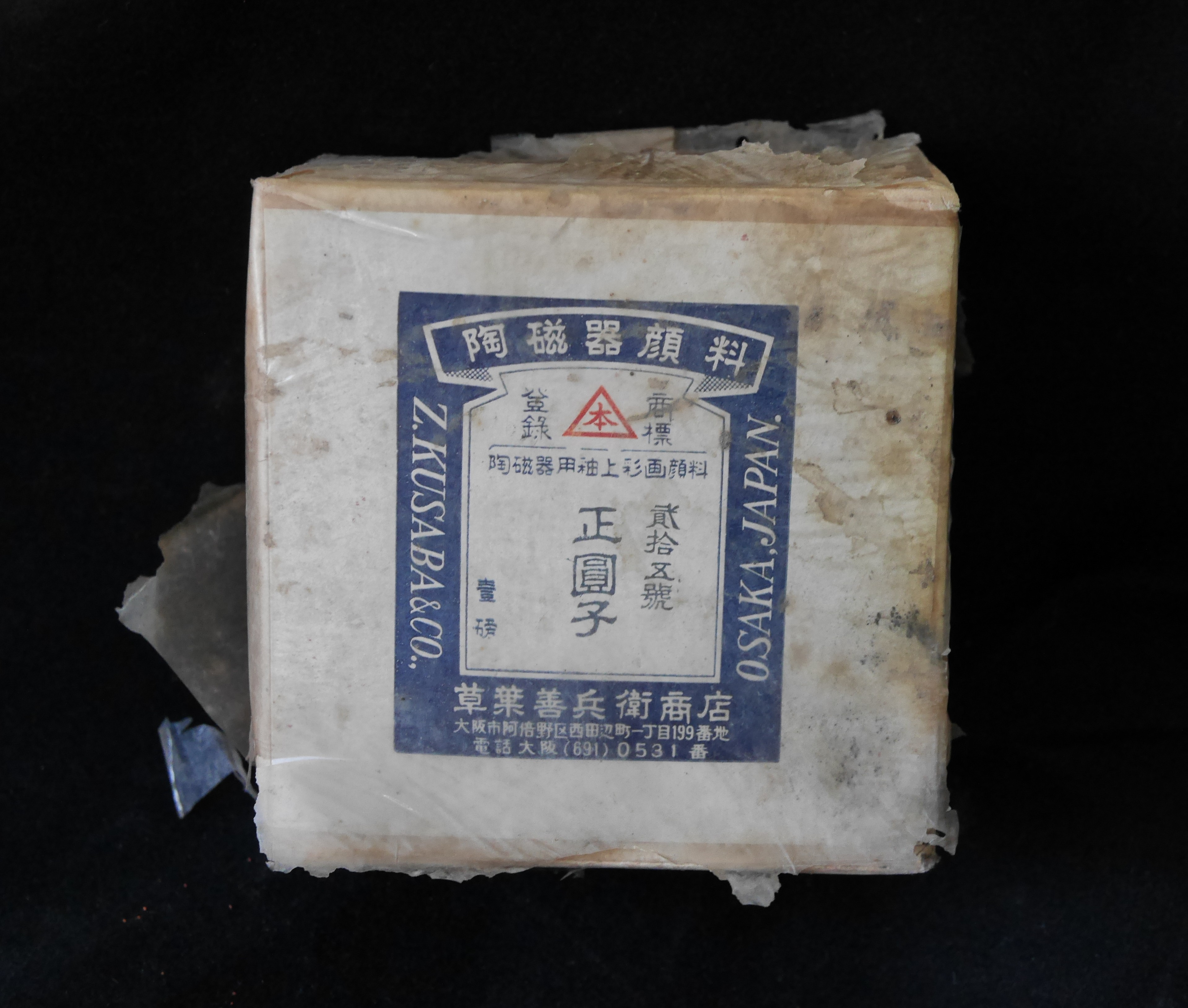
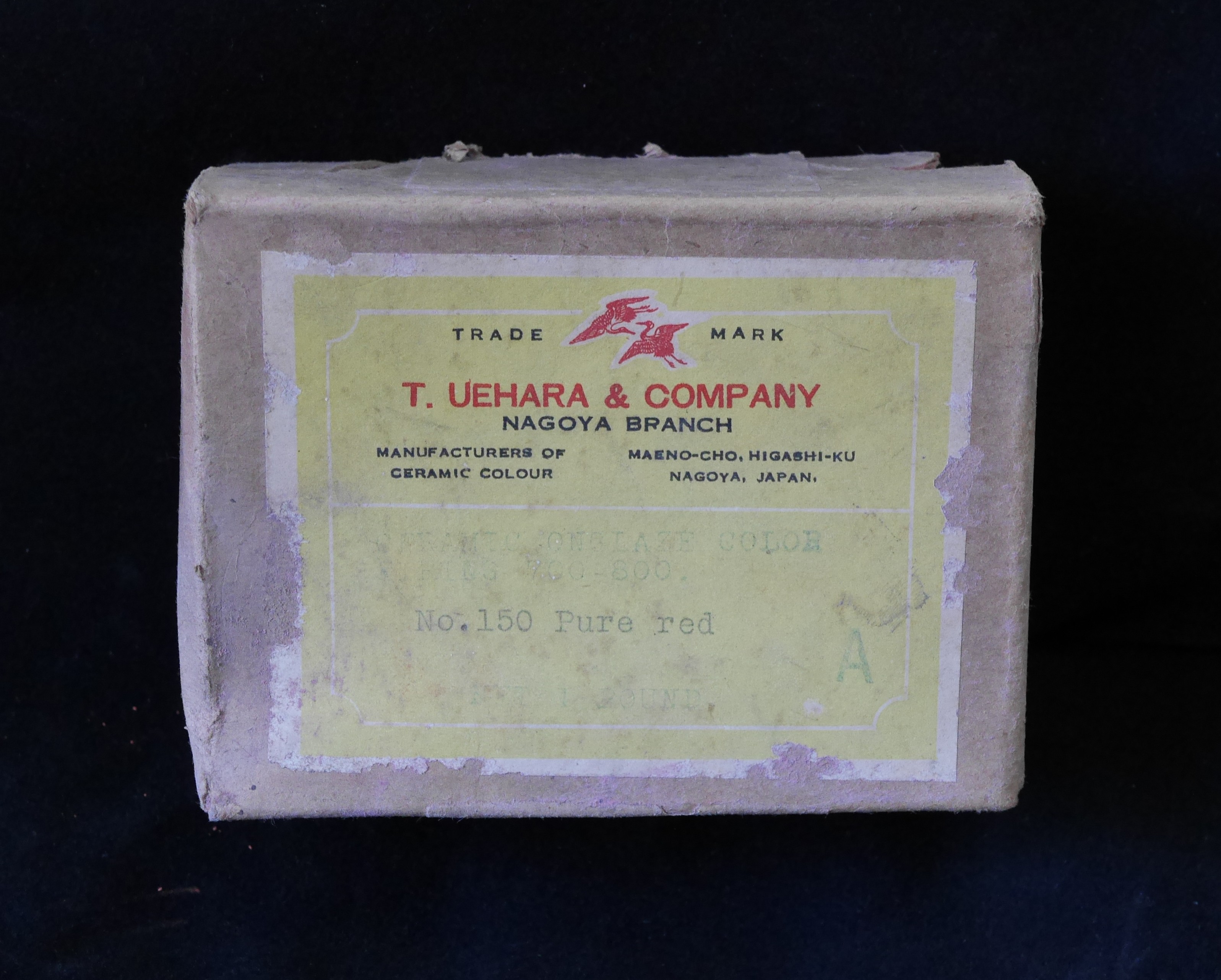
Since the Qing Dynasty, China has imported Western pigments and gold paint from overseas for use in painted porcelain; the materials commonly used in gangcai are also predominantly imported, including ready-made pigments from Z. Kusaba and T. Uehara in Japan, as well as the Netherland; liquid bright gold from Degussa in Germany; and gold paint manufactured in the UK, USA, and Japan.
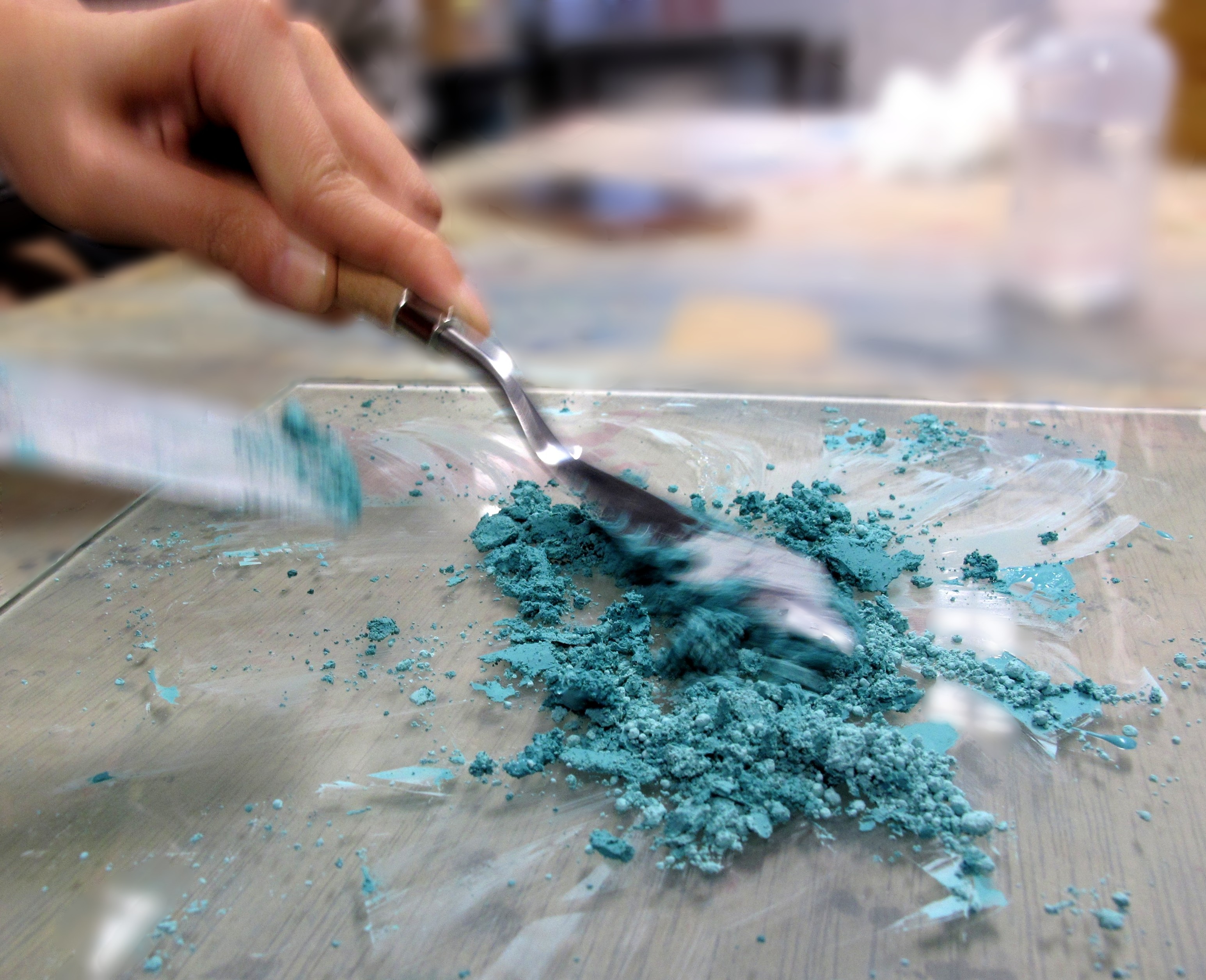
The pigments in their original forms are coarse powders that must first be ground, then gradually mixed with peach gum, and ground repeatedly until the materials are fully blended and the texture is uniform and smooth before they can be used. As the process of grinding pigments is labour-intensive, the industry later introduced electric pigment grinders to assist with the task.
Peach gum has to be thinned with water (supplied by The Hong Kong Ceramics Research Society)Peach gum mixed with pigment (supplied by The Hong Kong Ceramics Research Society)
Palette of reference colours when preparing new paint
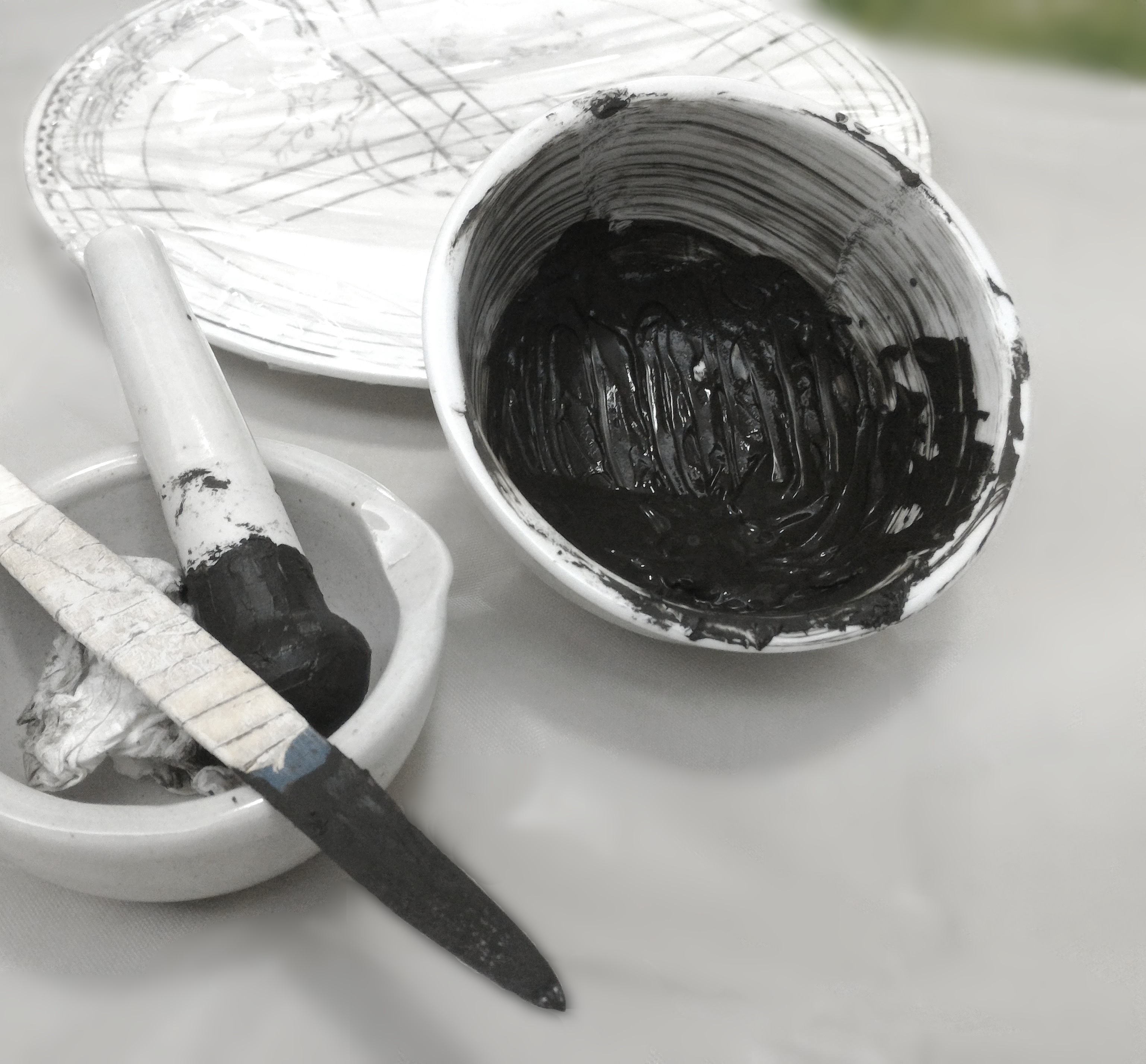
Matte black – This is the most important pigment in painted porcelain; its colour remains unchanged over time and it is commonly used for outlining. It is said that matte black was once as valuable as gold and extremely precious. It is made from the same materials as Duan ink slab produced in Zhaoqing, sourced from the scraps left behind from the carving of Duan ink slabs. These scraps are ground into a fine, smooth powder to produce matte black. Matte black requires a higher temperature than other pigments to blend into the porcelain, thus after used for outlining, it must be covered with other pigments, ensuring that the matte black lines do not flake off after firing.
Matte black powder must be grinded with mortar and pestle. (supplied by The Hong Kong Ceramics Research Society)Painting master using matter black to outline a lively dragon motif, the lines are fine (Collection of Tao Fong Shan Christian Centre)
Chinese purple of Cassius – A precious pink glaze with colloidal gold; it has a vivid and exquisite tone and is commonly used to paint flowers.
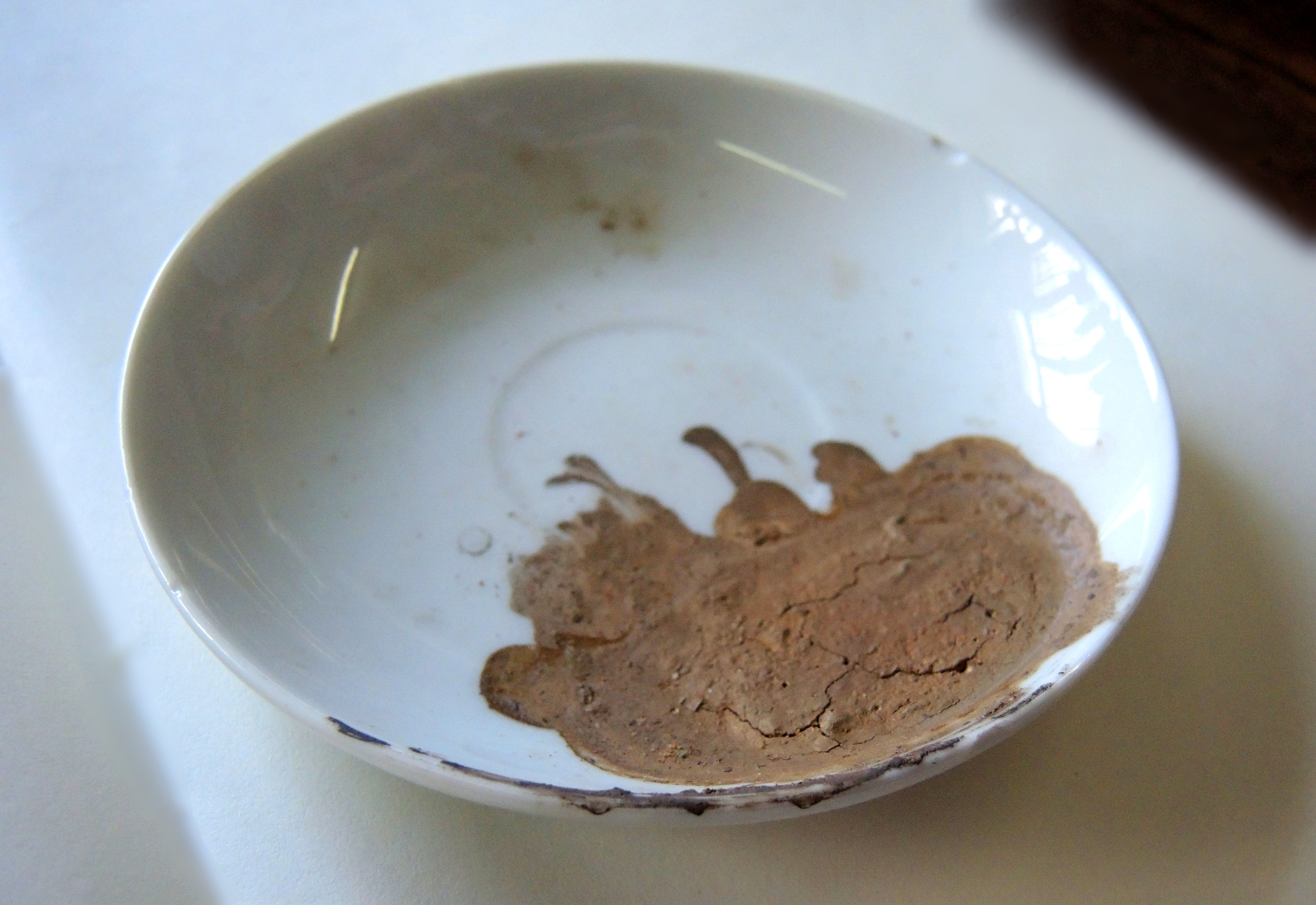
Gold Paint – During the early times, liquid gold was used to paint porcelain when gold colour was called for, with an elegant colour tone. Liquid gold was made with traditional method: gold is hammered into gold leaves, a small amount of the pigment iron red is added, and the mixture is blended with frankincense oil; it is then ground by hand for several days until it forms a paste before use. As liquid gold is made from genuine gold, it is traditionally the superior gold paint. After firing, the part painted must be polished with an agate burnisher. From the 1930s onwards, most painted porcelain factories began using imported liquid bright gold, which saves effort and easier to use. Liquid bright gold is a golden paint made chemically, the colour is more brilliant than that of genuine gold.
Liquid gold. (Collection of Yuet Tung China Works)Degussa liquid bright gold imported from Germany. (Collection of Yuet Tung China Works)
Pigment imported from Z. Kusaba & Co. in Osaka, Japan. (Collection of Yuet Tung China Works)Pigment imported from T. Uehara & Company in Nagoya, Japan. (Collection of Yuet Tung China Works)
The craft of gangcai draws heavily from Guangdong coloured porcelain, tracing further for the origin, it shares a common lineage with the time-honoured tradition of Jingdezhen porcelain from Jiangxi Province. Culture is an organic entity that evolves continuously; since the art of Chinese coloured porcelain was introduced to Hong Kong, it has built upon the past whilst forging a new path, undergoing numerous transformations in the process.
Basic Materials for Painting
In the production of painted porcelain, there has to be blanks and pigment for painting, it looks more splendid if glided.
Blanks
The porcelain used for painting is primarily plain white porcelain that has been fired with a transparent glaze; this is known in the trade as blank. Practitioners in Hong Kong mainly imported readily made blanks, sourced primarily from Chinese Mainland, Japan and Taiwan. Blanks from the Mainland can be further subdivided into those from Jiangxi, Meichao or Boluo. Japanese blanks almost exclusively came from Nagoya and were primarily for tableware, characterised by complete sets in a wide variety of forms, strictly adhering to specifications and had exquisite body quality. Taiwanese bodies were produced in Yingge; they include large-scale pieces with a porcelain body that is white with a hint of green, and were sturdy, making them particularly suitable for producing antique replicas. Many of the large gangcai pieces were made from blanks originate from Yingge. In the early days, Hong Kong painting masters specialised in exquisite antique replica porcelain often used old blanks for their work; these were sourced from the Guangzhou porcelain factory with a long history, Yee Shun Loong.
The main importers of blanks in Hong Kong include: Chan Suen Kee, Nam Mau, Miyamoto Bokei Kaisha, and Sunny China Co. Ltd. Suppliers of blanks from Jiangxi include Kung Wah Lee, whose proprietor was from Jiangxi. Following the launch of the China Import and Export Fair (Canton Fair), painted porcelain factories could be invited to the fair through the Hong Kong Porcelain Merchants Association. Some major gangcai factories would produce blanks in-house or commission ceramic factories to manufacture blanks for them to paint.
In fact, there were once several factories in Hong Kong producing blanks besides ceramic tableware and sculptures. They were primarily active during 1950s and 1980s, scattered around Tai Po, Lei Yue Mun and Yuen Long. Most of the businessowners came to Hong Kong from Chinese Mainland in 1949, and many were technical specialists in ceramic, including some who had studied in the USA or Germany; meanwhile, the ceramic sculptors were predominantly from Shiwan in Guangdong and Dehua in Fujian. Those gangcai wares that use blanks produced in Hong Kong and decorated in Hong Kong can be described as 100 per cent 'Made in Hong Kong'.
Various kinds of blanks –
Blanks for commodity porcelain (supplied by The Hong Kong Ceramics Research Society)Blank from Jiangxi province (Collection of Yuet Tung China Works)
Japanese blank: manufactured by Miyamoto Beoki in Nagoya. (Collection of Yuet Tung China Works)Blank from Taiwan (supplied by Yiu Hoi Ki)
Blank made in Hong Kong – bell shape bowl: produced by Majestic Chemical Art Craft Manufacture. Located at the present site of Jockey Club Lei Yue Mun Plus (1980s, collection of Yiu Hoi Ki)Blank made in Hong Kong – white porcelain figurines of the Great Beauties. (1960s, collection of Yuet Tung China Works)
Pigment and Liquid Gold
Since the Qing Dynasty, China has imported Western pigments and gold paint from overseas for use in painted porcelain; the materials commonly used in gangcai are also predominantly imported, including ready-made pigments from Z. Kusaba and T. Uehara in Japan, as well as the Netherland; liquid bright gold from Degussa in Germany; and gold paint manufactured in the UK, USA, and Japan.
The pigments in their original forms are coarse powders that must first be ground, then gradually mixed with peach gum, and ground repeatedly until the materials are fully blended and the texture is uniform and smooth before they can be used. As the process of grinding pigments is labour-intensive, the industry later introduced electric pigment grinders to assist with the task.
Peach gum has to be thinned with water (supplied by The Hong Kong Ceramics Research Society)Peach gum mixed with pigment (supplied by The Hong Kong Ceramics Research Society)
Palette of reference colours when preparing new paint
Matte black – This is the most important pigment in painted porcelain; its colour remains unchanged over time and it is commonly used for outlining. It is said that matte black was once as valuable as gold and extremely precious. It is made from the same materials as Duan ink slab produced in Zhaoqing, sourced from the scraps left behind from the carving of Duan ink slabs. These scraps are ground into a fine, smooth powder to produce matte black. Matte black requires a higher temperature than other pigments to blend into the porcelain, thus after used for outlining, it must be covered with other pigments, ensuring that the matte black lines do not flake off after firing.
Matte black powder must be grinded with mortar and pestle. (supplied by The Hong Kong Ceramics Research Society)Painting master using matter black to outline a lively dragon motif, the lines are fine (Collection of Tao Fong Shan Christian Centre)
Chinese purple of Cassius – A precious pink glaze with colloidal gold; it has a vivid and exquisite tone and is commonly used to paint flowers.
Gold Paint – During the early times, liquid gold was used to paint porcelain when gold colour was called for, with an elegant colour tone. Liquid gold was made with traditional method: gold is hammered into gold leaves, a small amount of the pigment iron red is added, and the mixture is blended with frankincense oil; it is then ground by hand for several days until it forms a paste before use. As liquid gold is made from genuine gold, it is traditionally the superior gold paint. After firing, the part painted must be polished with an agate burnisher. From the 1930s onwards, most painted porcelain factories began using imported liquid bright gold, which saves effort and easier to use. Liquid bright gold is a golden paint made chemically, the colour is more brilliant than that of genuine gold.
Liquid gold. (Collection of Yuet Tung China Works)Degussa liquid bright gold imported from Germany. (Collection of Yuet Tung China Works)
Pigment imported from Z. Kusaba & Co. in Osaka, Japan. (Collection of Yuet Tung China Works)Pigment imported from T. Uehara & Company in Nagoya, Japan. (Collection of Yuet Tung China Works)