About this sitePainting and Calligraphy Porcelain Imbued with Literati ArtistryEvents Recap
Painting and Calligraphy Porcelain Imbued with Literati Artistry
20th Century Hong Kong Painted Porcelains—Gangcai
BROWSE BY
RECENTLY VISITED
{{removeNBSP(item.name)}}
20th Century Hong Kong Painted Porcelains—Gangcai
BROWSE BY:
RECENTLY VISITED
{{item.name}}
Painting and Calligraphy Porcelain Imbued with Literati Artistry
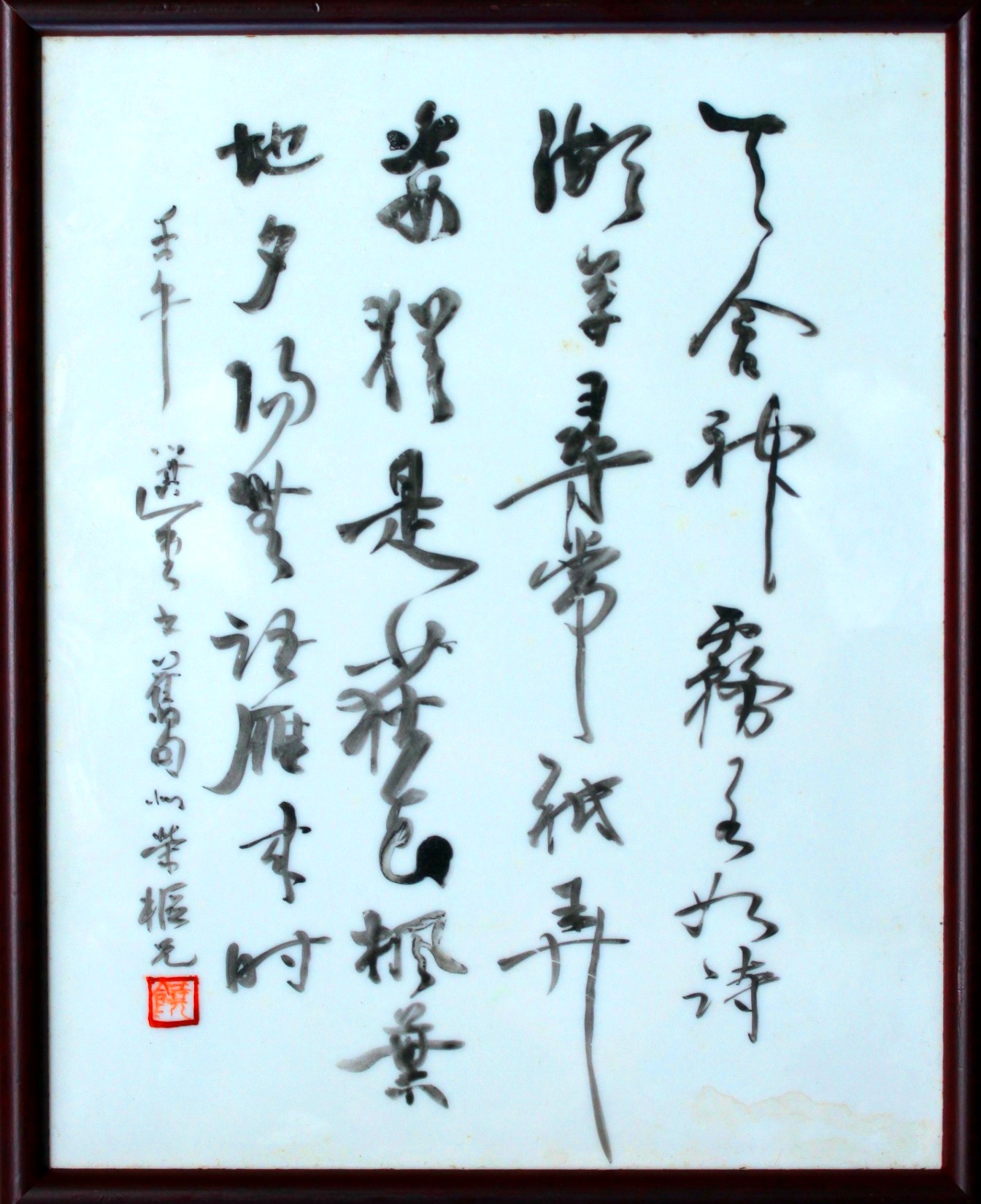
Tso Wing Shui, the second-generation owner of Yuet Tung China Works, cultivated extensive connections within artistic circles. In the mid-1960s, Yang Shanshen and Chao Shao-an, masters of ink painting from the Lingnan School, along with several disciples, visited Yuet Tung China Works to experiment with painting porcelain. After completion, the pieces were fired at Yuet Tung China Works. Among these, several porcelain plates were collaborations by the two masters during a particularly inspired occasion, making them exceptionally precious. The masters and their disciples subsequently revisited Yuet Tung China Works from time to time, often presenting works to Tso Wing-shui. Some of these pieces later entered into the collection of the Hong Kong Heritage Museum. The themes painted by Yang Shanshen and Chao Shao-an included flowers, magpies, beetles, mantises, cicadas, lychees, and pomegranates. Employing techniques of water and powder infusion from the Lingnan School of painting, they used enamels instead of ink to give the pieces the hues and outlines. Their brushwork was succinct and executed effortlessly, capturing the essence of the subjects with remarkable grace. Additionally, Hong Kong calligrapher Chen Jinghong and other masters of Chinese arts visited Yuet Tung China Works to create calligraphic porcelain. Local painters and calligraphers use white porcelain in place of their usual instruments, their coloured porcelain becoming a distinctive element within Hong Kong’s colourful heritage, imbued with the artistic spirit of the literati.
Painting and Calligraphy Porcelain—
Porcelain plate with portrait (Painted by Yang Shan Shen; collection of Yuet Tung China Works)Calligraphy porcelain tile (Inscribed by Jao Tsung-I; collection of Yuet Tung China Works)
Painting and Calligraphy Porcelain Imbued with Literati Artistry
Tso Wing Shui, the second-generation owner of Yuet Tung China Works, cultivated extensive connections within artistic circles. In the mid-1960s, Yang Shanshen and Chao Shao-an, masters of ink painting from the Lingnan School, along with several disciples, visited Yuet Tung China Works to experiment with painting porcelain. After completion, the pieces were fired at Yuet Tung China Works. Among these, several porcelain plates were collaborations by the two masters during a particularly inspired occasion, making them exceptionally precious. The masters and their disciples subsequently revisited Yuet Tung China Works from time to time, often presenting works to Tso Wing-shui. Some of these pieces later entered into the collection of the Hong Kong Heritage Museum. The themes painted by Yang Shanshen and Chao Shao-an included flowers, magpies, beetles, mantises, cicadas, lychees, and pomegranates. Employing techniques of water and powder infusion from the Lingnan School of painting, they used enamels instead of ink to give the pieces the hues and outlines. Their brushwork was succinct and executed effortlessly, capturing the essence of the subjects with remarkable grace. Additionally, Hong Kong calligrapher Chen Jinghong and other masters of Chinese arts visited Yuet Tung China Works to create calligraphic porcelain. Local painters and calligraphers use white porcelain in place of their usual instruments, their coloured porcelain becoming a distinctive element within Hong Kong’s colourful heritage, imbued with the artistic spirit of the literati.
Painting and Calligraphy Porcelain—
Porcelain plate with portrait (Painted by Yang Shan Shen; collection of Yuet Tung China Works)Calligraphy porcelain tile (Inscribed by Jao Tsung-I; collection of Yuet Tung China Works)