The Localisation of Western Patterns: Governor’s Pattern
Hong Kong, once under British colonial rule, saw the late Lady MacLehose, wife of the former Governor, commissioned the Yuet Tung China Works Factory in 1975 to produce a specialised dinner service comprising approximately forty pieces. Though the service itself was taken back to Britain by Lady MacLehose, the pattern she specifically selected for it has since been applied to other porcelain wares. To this day, it remains highly popular with customers both locally and internationally. The porcelain factory affectionately dubbed this design the Governor’s pattern, a name that has since become widely recognised.
The Governor’s pattern resembles the Hogarth pattern. A design that was originally found on tableware produced by an English manufacturer L.A. Birks & Co. in Stoke-on-Trent between the late 19th and early 20th centuries. Tracing its origins further, the design derives from patterns found on Delftware. Delft, a renowned Dutch ceramics town, produced numerous blue-and-white porcelains with distinctively Oriental motifs after establishing maritime trade with China in the 16th century. Originally executed as underglaze blue-and-white works, these pieces were reinterpreted by Hong Kong’s master decorators upon arrival in the colony. Drawing inspiration from British designs, they rearranged the motifs and applied them as overglaze decoration. The porcelain factory specialised in overglaze decoration, replacing the original underglaze blue with overglaze blue painting. Later, when Hong Kong hotels commissioned custom tableware, they employed the same pattern but substituted red for the blue, leading to both red and blue Governor’s pattern becoming equally popular. Moreover, while the porcelain factory initially reserved the Governor’s pattern for Western-style tableware, it later applied these distinctly Western patterns to Chinese tableware. This fusion of Eastern and Western elements perfectly embodies Hong Kong’s unique character.
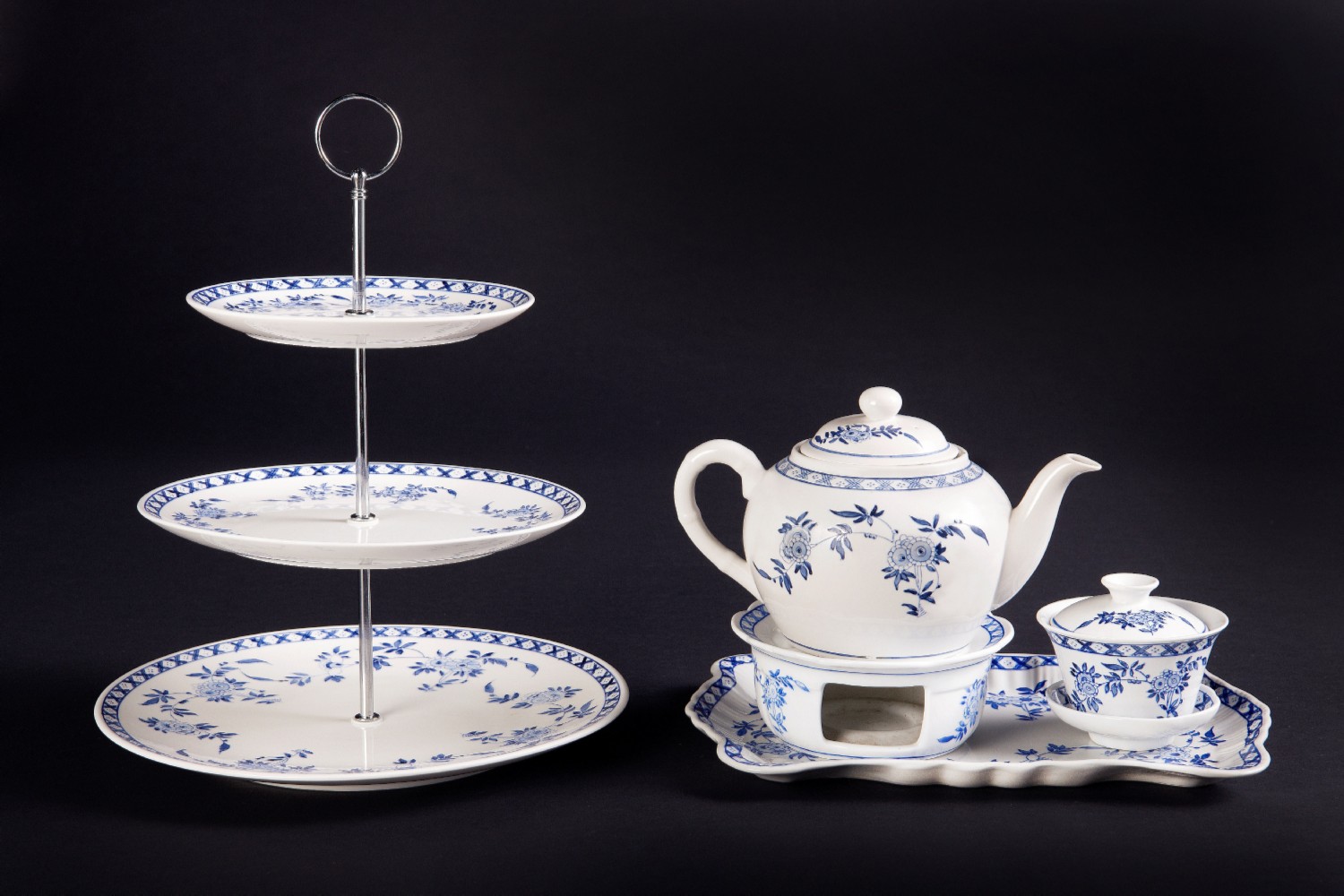
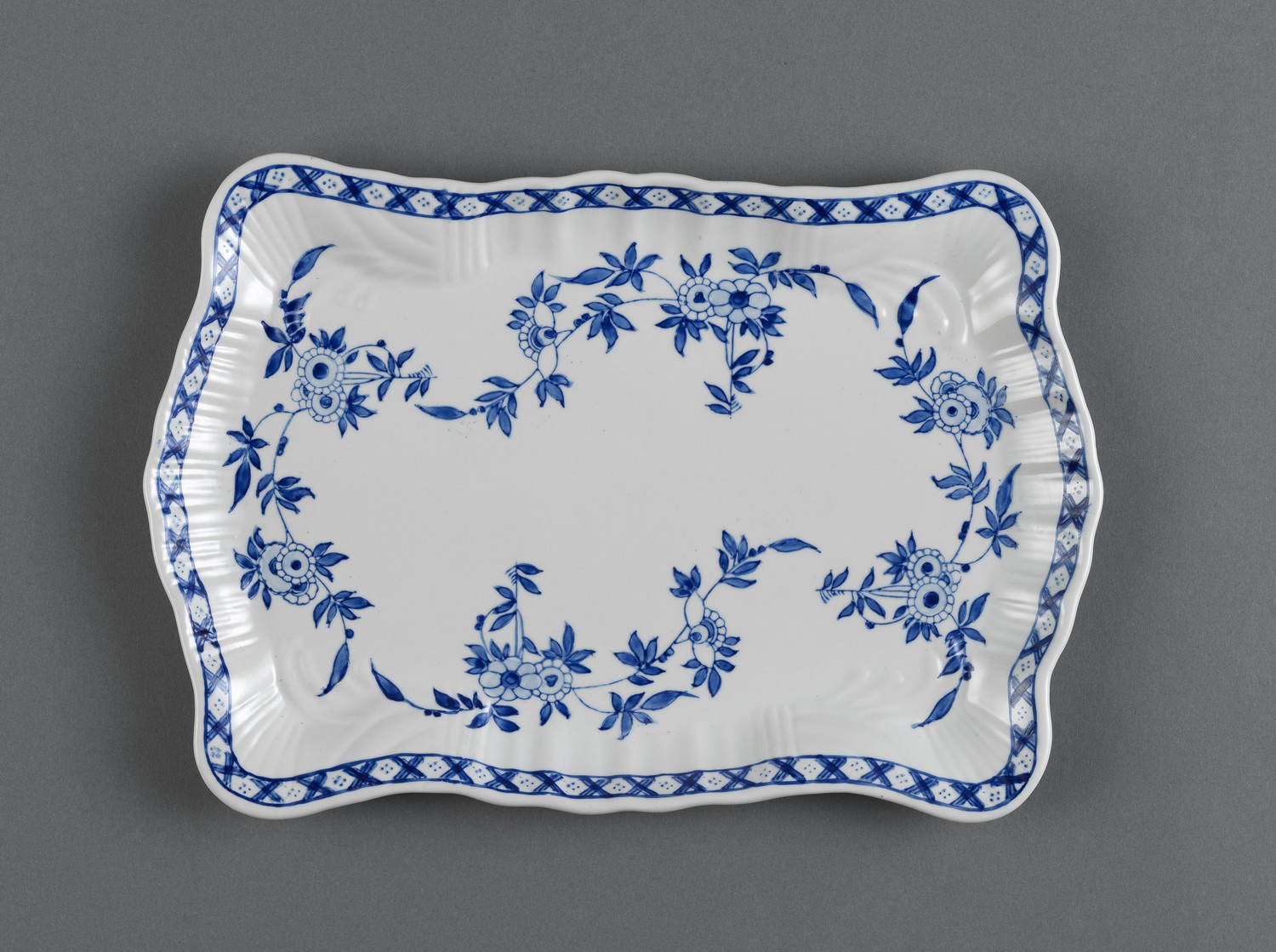
Blue painted tea service with the Governor’s Pattern (From the 1970s to the present, painted and collected by Yuet Tung China Works)
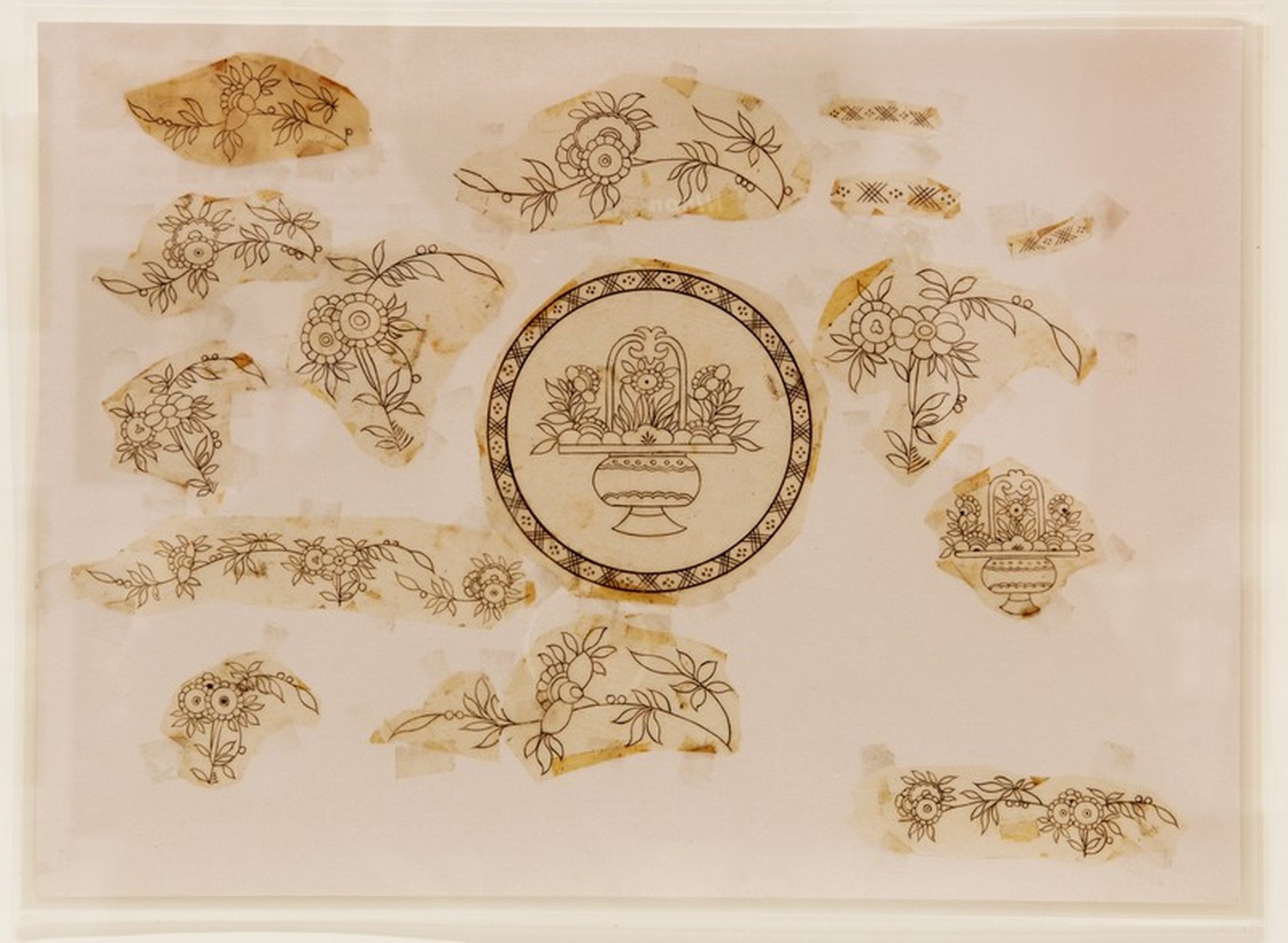
Design of the Governor’s Pattern (1975; Drawn by Mak Kam Chor; Collection of Yuet Tung China Works)
The Localisation of Western Patterns: Governor’s Pattern
Hong Kong, once under British colonial rule, saw the late Lady MacLehose, wife of the former Governor, commissioned the Yuet Tung China Works Factory in 1975 to produce a specialised dinner service comprising approximately forty pieces. Though the service itself was taken back to Britain by Lady MacLehose, the pattern she specifically selected for it has since been applied to other porcelain wares. To this day, it remains highly popular with customers both locally and internationally. The porcelain factory affectionately dubbed this design the Governor’s pattern, a name that has since become widely recognised.
The Governor’s pattern resembles the Hogarth pattern. A design that was originally found on tableware produced by an English manufacturer L.A. Birks & Co. in Stoke-on-Trent between the late 19th and early 20th centuries. Tracing its origins further, the design derives from patterns found on Delftware. Delft, a renowned Dutch ceramics town, produced numerous blue-and-white porcelains with distinctively Oriental motifs after establishing maritime trade with China in the 16th century. Originally executed as underglaze blue-and-white works, these pieces were reinterpreted by Hong Kong’s master decorators upon arrival in the colony. Drawing inspiration from British designs, they rearranged the motifs and applied them as overglaze decoration. The porcelain factory specialised in overglaze decoration, replacing the original underglaze blue with overglaze blue painting. Later, when Hong Kong hotels commissioned custom tableware, they employed the same pattern but substituted red for the blue, leading to both red and blue Governor’s pattern becoming equally popular. Moreover, while the porcelain factory initially reserved the Governor’s pattern for Western-style tableware, it later applied these distinctly Western patterns to Chinese tableware. This fusion of Eastern and Western elements perfectly embodies Hong Kong’s unique character.
Blue painted tea service with the Governor’s Pattern (From the 1970s to the present, painted and collected by Yuet Tung China Works)
Design of the Governor’s Pattern (1975; Drawn by Mak Kam Chor; Collection of Yuet Tung China Works)