About this siteProducts Spanning Across CategoriesEvents Recap
Products Spanning Across Categories
20th Century Hong Kong Painted Porcelains—Gangcai
BROWSE BY
RECENTLY VISITED
{{removeNBSP(item.name)}}
20th Century Hong Kong Painted Porcelains—Gangcai
BROWSE BY:
RECENTLY VISITED
{{item.name}}
Products Spanning Across Categories
There are workshops in Hong Kong producing porcelain figurines in the forms of humans, buddha and deities, animals, and ornamental pieces to be placed in courtyards, these are primarily replicas in the styles of Shiwan, Tang Sancai, and Dehua, among those workshops, many also take orders from factories to supply white blanks for painting. Those who design the shapes of the pieces and make the moulds are predominantly clay sculptors from Chinese Mainland. Their techniques come primarily from Shiwan in Guangdong and Dehua in Fujian. However, there are some from Teoswa region setting up workshops such as Tung Kwong Lai Kee producing folding screens in porcelain with relief figurines. Masters from Shiwan traditionally uses clay to make sculptures, rarely produce porcelain which is quite different from clay. Nevertheless, there are cases where some are involved in porcelain manufacturing after they come to Hong Kong.
The sculpting masters and painting masters arriving south from Chinese Mainland carry with them the skills and techniques, working together to produce unique products that are unique to Hong Kong. One such example: a famille rose horse made with white blank made by the sculpting master from Shiwan. Pang Chi Wing, drawing inspiration from Tang Sancai horse figurines, which was then handed to Gangcai painting master from Kaiping, Ng Siu Man, and his wife, Yuen Wai Fong, to complete the decoration. The horse figurine blends the characteristics from both Guangdong and Jiangxi traditions. The cloth for the saddle features a pattern that was meant only for painting garments of people in the past, this unconventional use unites elements from porcelain with ancient garments.
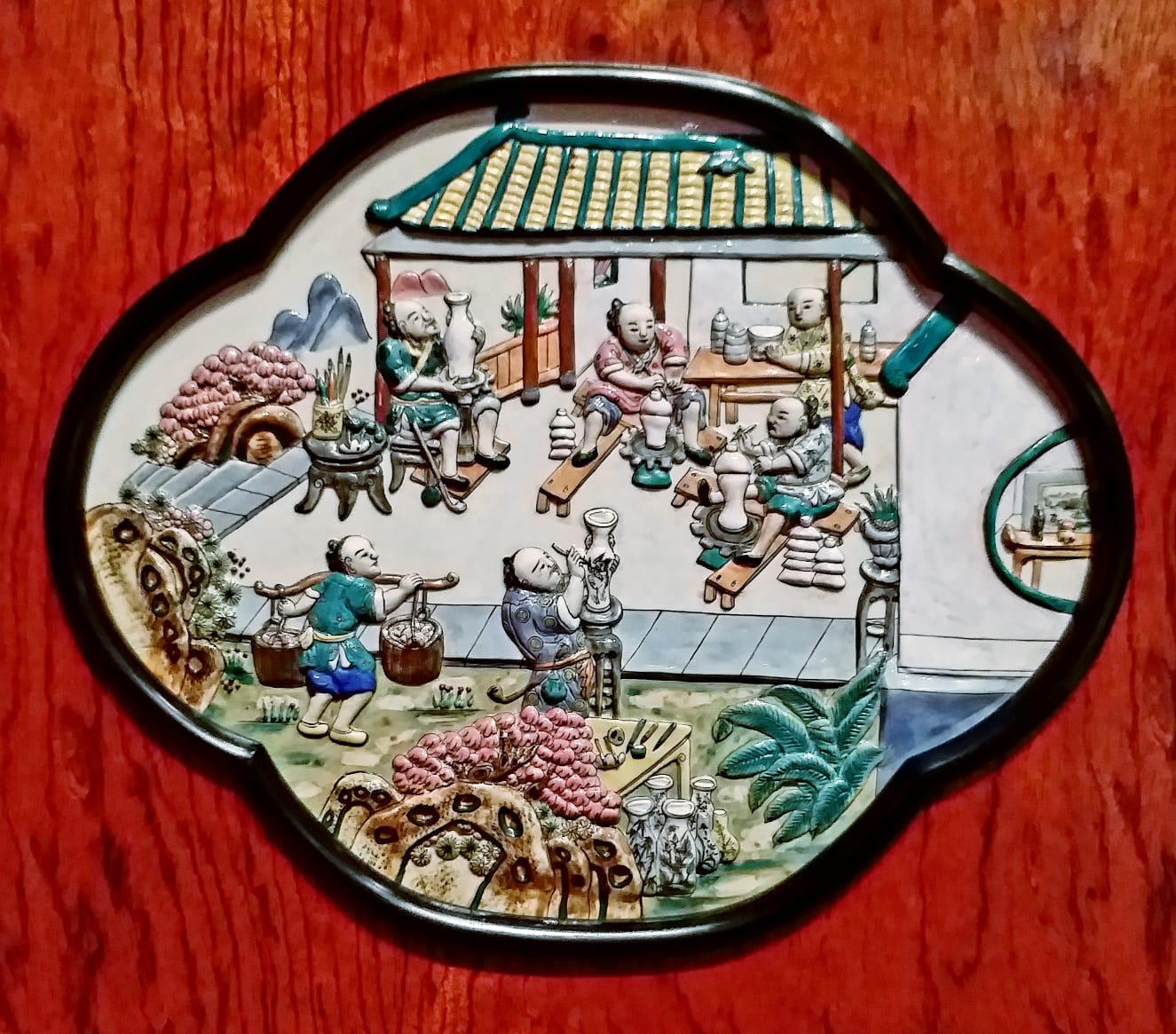
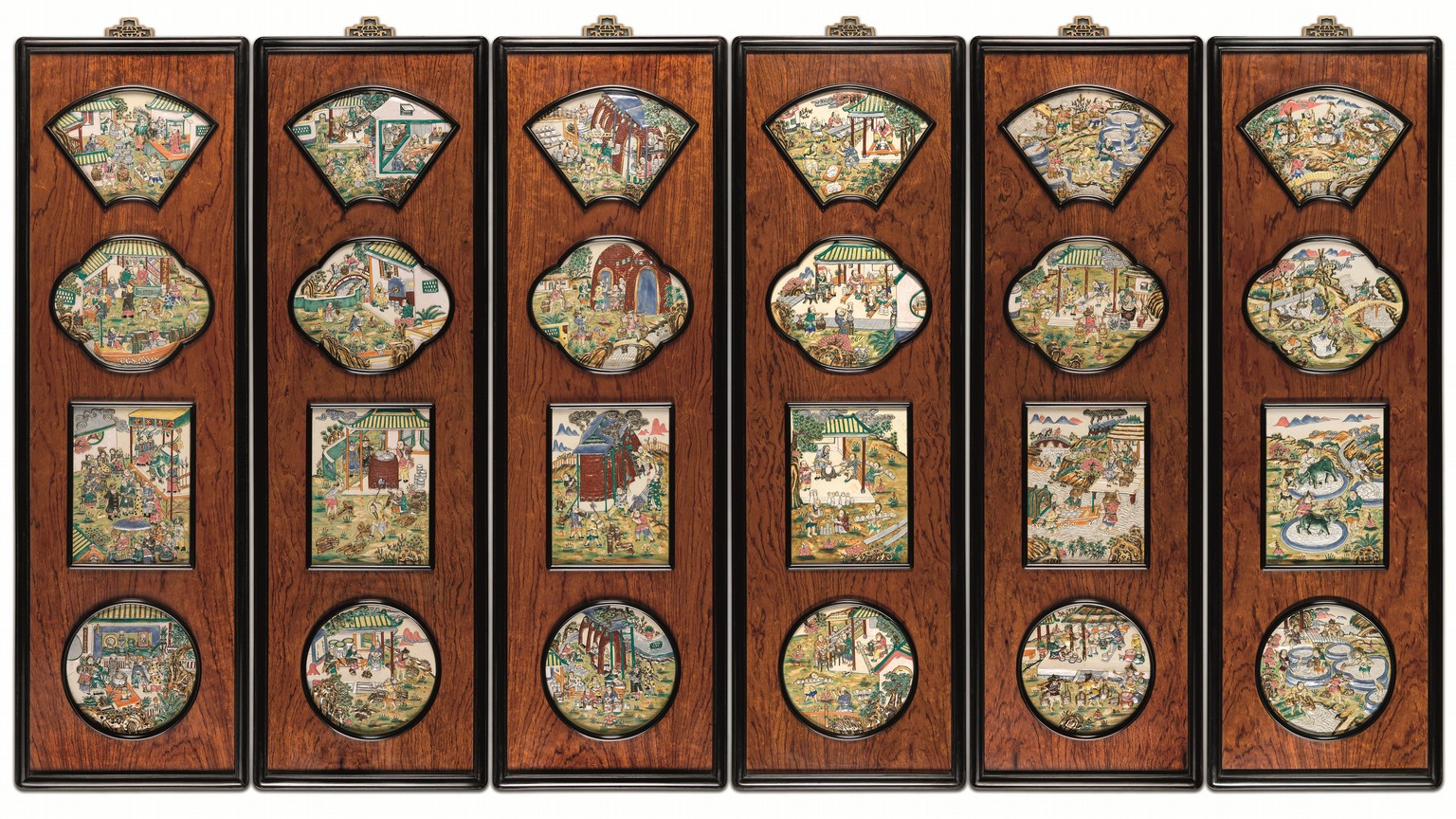
Relief plaques with scenes of the making and trading of porcelain—24-piece set/ Part (Early 1990s; Blank and paintings by porcelain factory Tung Kwong Lai Kee, layout design by Lee Ying Sang; Collection of Hong Kong Heritage Museum)
There are workshops in Hong Kong producing porcelain figurines in the forms of humans, buddha and deities, animals, and ornamental pieces to be placed in courtyards, these are primarily replicas in the styles of Shiwan, Tang Sancai, and Dehua, among those workshops, many also take orders from factories to supply white blanks for painting. Those who design the shapes of the pieces and make the moulds are predominantly clay sculptors from Chinese Mainland. Their techniques come primarily from Shiwan in Guangdong and Dehua in Fujian. However, there are some from Teoswa region setting up workshops such as Tung Kwong Lai Kee producing folding screens in porcelain with relief figurines. Masters from Shiwan traditionally uses clay to make sculptures, rarely produce porcelain which is quite different from clay. Nevertheless, there are cases where some are involved in porcelain manufacturing after they come to Hong Kong.
The sculpting masters and painting masters arriving south from Chinese Mainland carry with them the skills and techniques, working together to produce unique products that are unique to Hong Kong. One such example: a famille rose horse made with white blank made by the sculpting master from Shiwan. Pang Chi Wing, drawing inspiration from Tang Sancai horse figurines, which was then handed to Gangcai painting master from Kaiping, Ng Siu Man, and his wife, Yuen Wai Fong, to complete the decoration. The horse figurine blends the characteristics from both Guangdong and Jiangxi traditions. The cloth for the saddle features a pattern that was meant only for painting garments of people in the past, this unconventional use unites elements from porcelain with ancient garments.
Relief plaques with scenes of the making and trading of porcelain—24-piece set/ Part (Early 1990s; Blank and paintings by porcelain factory Tung Kwong Lai Kee, layout design by Lee Ying Sang; Collection of Hong Kong Heritage Museum)